LinkedIn ghostwriter vs agency vs AI tool: which to pick
An honest comparison from an agency founder, including when a freelancer or an AI tool is the better buy.

Founder of Blen10 min read
On this page
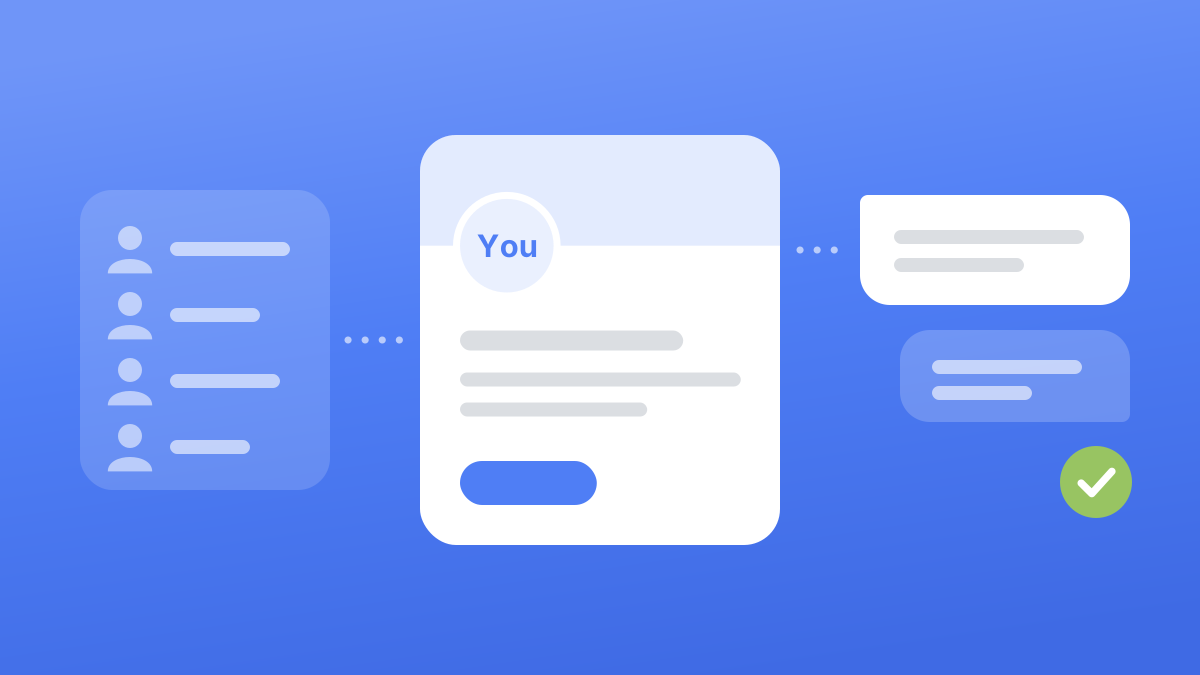
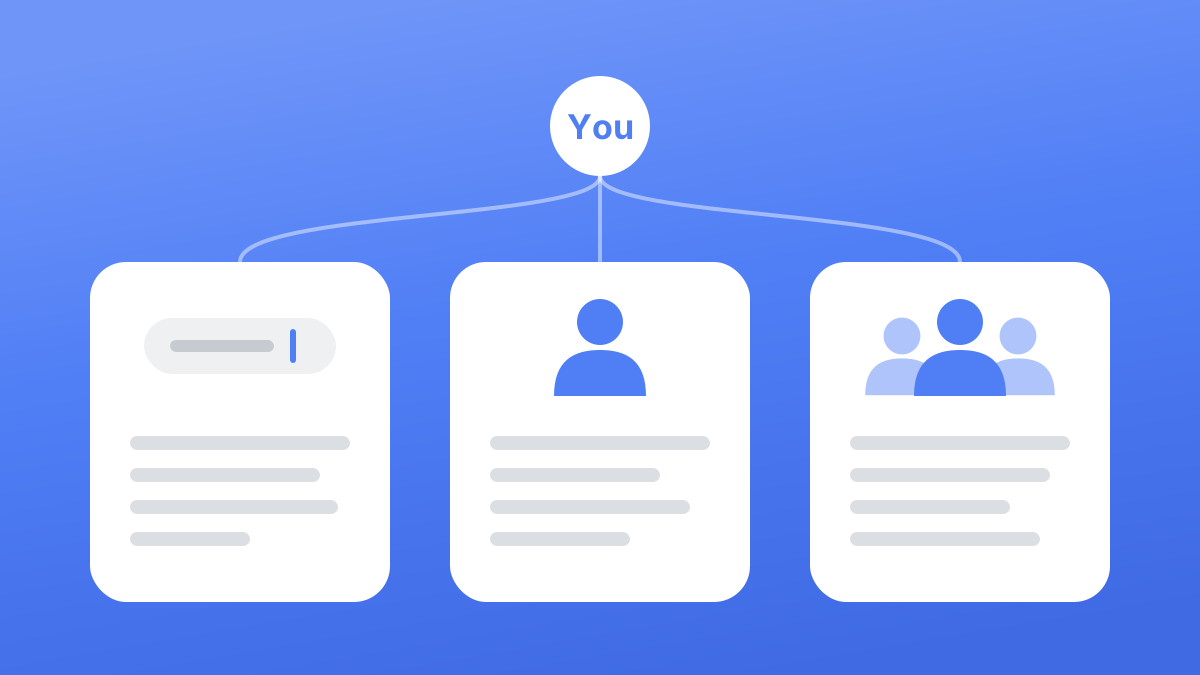
Pick an AI tool if you like writing and will protect a few hours every week to do it. Hire a freelance ghostwriter if you only need posts, you already have a way to turn attention into sales calls, and you're happy to manage one person. Choose an agency when you want your profile, your posts and your outreach all aimed at the same buyers, and you'd rather not run any of it yourself.
Whichever you pick, the thing that decides whether the posts are any good is where the ideas come from. I run a LinkedIn agency, so weigh what follows with that in mind. I'll say plainly where the other two options are the better buy.
Ghostwriter vs agency vs AI tool at a glance#
| AI tool | Freelance ghostwriter | Agency | |
|---|---|---|---|
| Where the ideas come from | You, typed into a prompt | You on a call, or their own research | You in an interview, if their process is good |
| Who writes | The tool drafts, you rewrite | One person | A writer, usually backed by an editor |
| Your time | Highest, because you think, prompt, edit and post | Medium, for calls, feedback and approvals | Lowest, an interview and approvals |
| What it covers | Drafts, often scheduling | Posts | Posts and usually the profile, sometimes lead lists and outreach |
| If they stop | Nothing breaks | Posting stops | Someone else picks it up |
| Cost | Lowest | Middle | Highest |
| Biggest risk | Posts that read like AI | Voice drift and one point of failure | Template voice and lock-in |
| Best for | Founders who enjoy writing | Founders who need posts and nothing else | Founders who want the whole system run for them |
Prices swing a lot inside each column, so I've kept cost relative here. The real ranges, and what a fee should include, are in what a LinkedIn ghostwriter costs.
The row that matters most for getting clients is what each option covers. A post is only one piece of that job. Someone reads it and clicks your name, so your profile has to explain what you do and who it's for. The buyers who never see your posts need to be found and messaged, which takes a list and a sequence. A tool or a freelancer usually covers the post and leaves the rest with you.
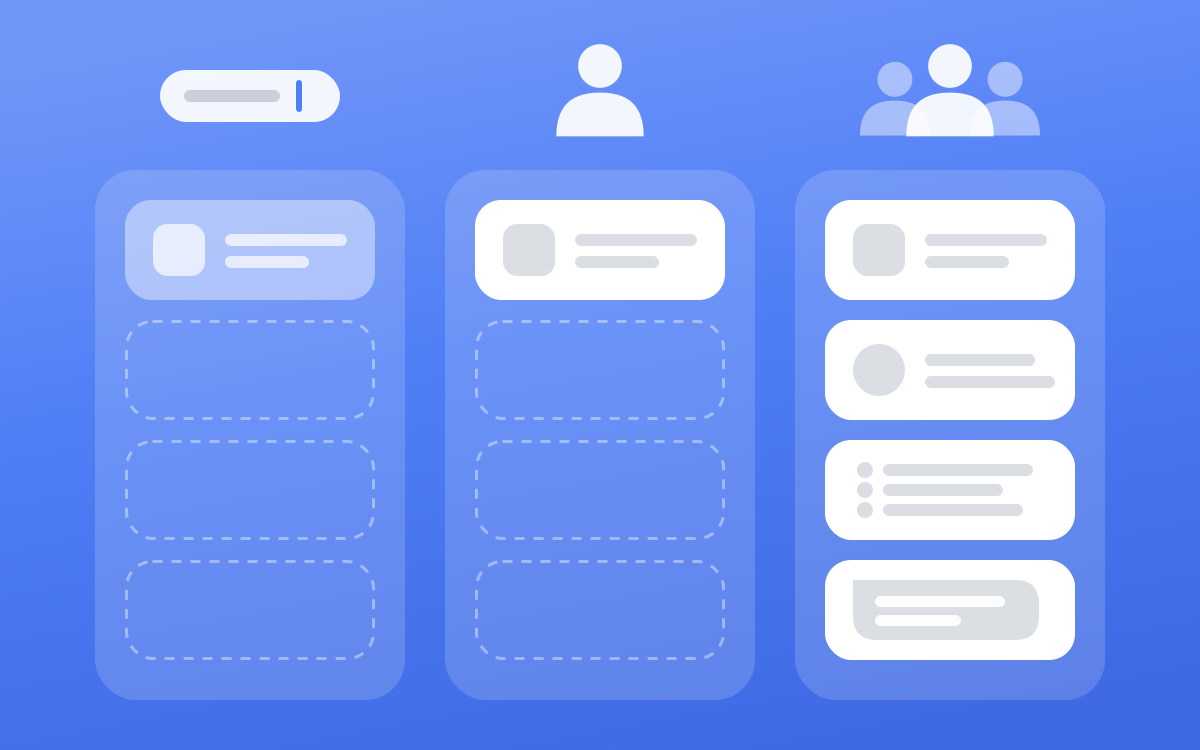
Where the ideas come from matters more than who writes#
Every LinkedIn post has two halves. The substance is what happened, what you learned and what you think that other people in your field don't. The craft is the hook, the structure and the rhythm. All three options can supply craft, but only you can supply substance, so the useful question is how each option gets it out of your head.
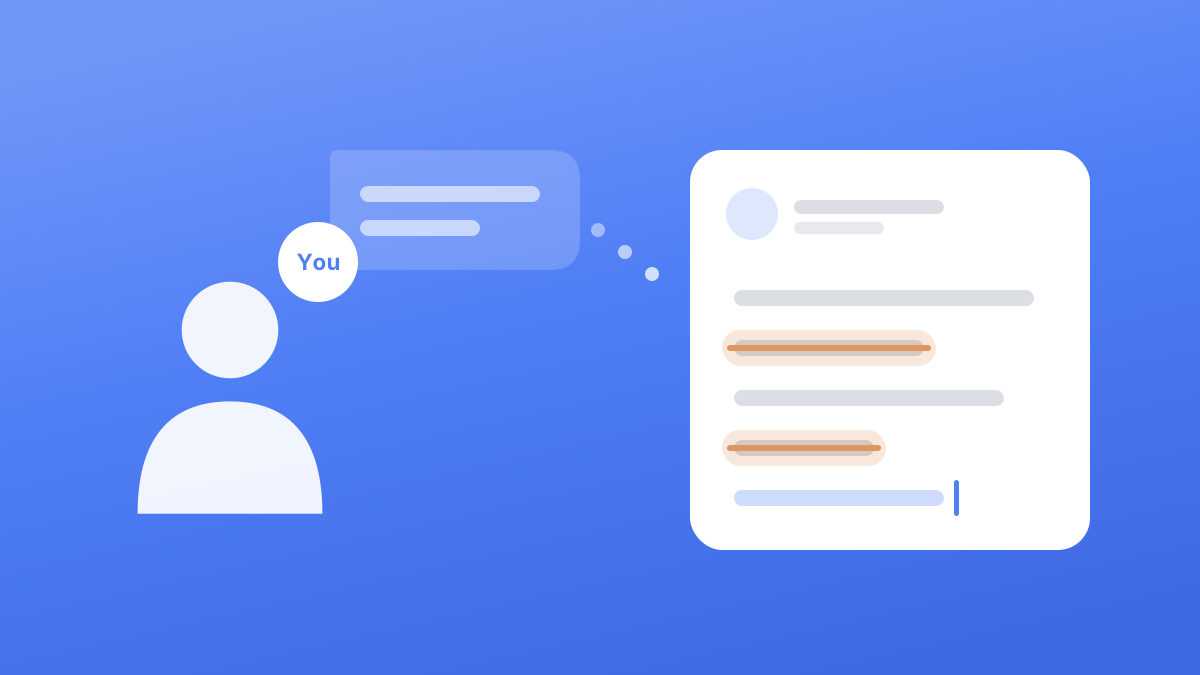
An AI tool gets it from your prompt, and one line of input comes back as one line of thinking stretched to 250 words. A freelancer who writes from research gets it from the same articles your competitors read, which is why posts built that way tend to sound alike. A writer who interviews you gets it from you, and that's the only route to posts nobody else could have written.
At Blen, each client sits for an interview and we plan 12 posts from it. The hard part is writing the questions. We hold each one to a single test, that someone with no context can understand it on its own, because clients often answer them cold weeks later. So every question carries its own setup.
Here's a weak question.
What have you learned about hiring?
And here's a strong one, written for an imaginary founder.
In your first year you hired three salespeople before you had a pitch that worked, and two of them left inside six months. What did you notice in those months that changed how you hire now?
The first gets a generic answer, while the second gets a story with numbers in it, and that story is a post.
When an AI tool is enough, and where it goes wrong#
A tool is the right buy if you enjoy writing, you already have opinions you want to share, and you'll sit down every week to do it. It helps with hooks, structure and formatting, and most tools will schedule the post for you. It's also the cheapest way to find out whether you'll stick with posting at all.
What goes wrong#
A tool moves the work around. You still bring the idea, you still do the edit, and the blank page is still yours, so if time is your problem a tool leaves it unsolved.
The bigger risk is how the posts read. The tells are easy to spot once you know them, like a colon setup such as "Here's the thing:", sentences that define something by what it isn't, short fragments stacked back to back, and long dashes everywhere. Our own review checklist hunts for exactly these on every draft, because a founder's post that reads even faintly like a machine costs them credibility.
LinkedIn is pushing back as well. In July 2026 its chief product officer, Hari Srinivasan, wrote (opens in a new tab) that LinkedIn is ramping up classifiers that identify AI slop and low-quality posts, which "will reduce the amount of AI slop you might see in suggested content and content from outside your network." Members can also flag a post that seems like AI slop. Those two places are where people who don't know you yet find your posts.
The feed is already crowded with it. Originality.ai (opens in a new tab), a company that sells an AI detector, classified 81.2% of 5,000 public LinkedIn posts from July 2026, each at least 100 words long, as likely AI. Detectors get things wrong, and Srinivasan says as much in the same post, so treat that number as a rough signal rather than a count.
If you go this way, read how to write LinkedIn posts with AI that sound human first. The short version is to get the idea from yourself, let the tool shape it, then edit by ear.
When a freelance ghostwriter is enough, and where it goes wrong#
A good freelancer is often the right call. It works when you want posts and nothing else, when leads already come in some other way (referrals, a sales team, a strong network), and when you find someone who interviews you instead of researching you. You also need to be fine giving feedback every week, since a freelancer can only work with the input you give.
What goes wrong#
- Posting stops when they do. If they take a holiday, fall ill or land a bigger client, your feed goes quiet with nobody to cover.
- The voice drifts. Over a few months the posts slide toward how the writer sounds. The check we use is a blind test, asking whether the draft could sit among your real past posts without anyone noticing. Keep a written voice guide with your own phrases and read every draft against it.
- Research replaces substance. A writer who never talks to you only has the internet to work from.
- The posts have nothing behind them. Views don't turn into conversations when your profile doesn't say what you sell and nobody reaches out to the people reading. That gap is what how to get clients on LinkedIn covers.
- Edit rounds eat the time you were trying to save. If you rewrite every draft, you're still the writer, which is why we stopped asking clients for edits.
When an agency is worth it, and where it goes wrong#
An agency earns its fee when you want the whole thing handled and pointed at one buyer. That covers a profile rewritten for the people you sell to, posts built from your own stories, a list of real buyers and outreach that starts conversations with them. It's also the option that keeps running when a writer leaves.
What goes wrong#
- A senior person sells it and a junior one writes it. Ask who will write your posts, and talk to that person before you sign.
- Every client sounds the same. Agencies that run on templates reuse hooks and closers across accounts, so ask for a few live client profiles and read their recent posts side by side.
- They sell engagement. Pods and comment rings go against LinkedIn's Professional Community Policies (opens in a new tab), which tell members not to "agree with others ahead of time to like or re-share each other's content." If engagement is on the invoice, ask exactly what it means.
- Outreach runs carelessly from your account. It's your name on every message and your account at risk, and LinkedIn lists (opens in a new tab) sending "many invitations within a short amount of time" as a reason it restricts invitations. Pacing is covered in is LinkedIn automation safe.
- You leave with nothing. The contract is long, and when it ends the voice guide, lead lists and CRM stay with the agency.
- The report counts the wrong thing. Impressions are easy to grow, so ask how many conversations with the right people came out of last month.
What you still do in each option#
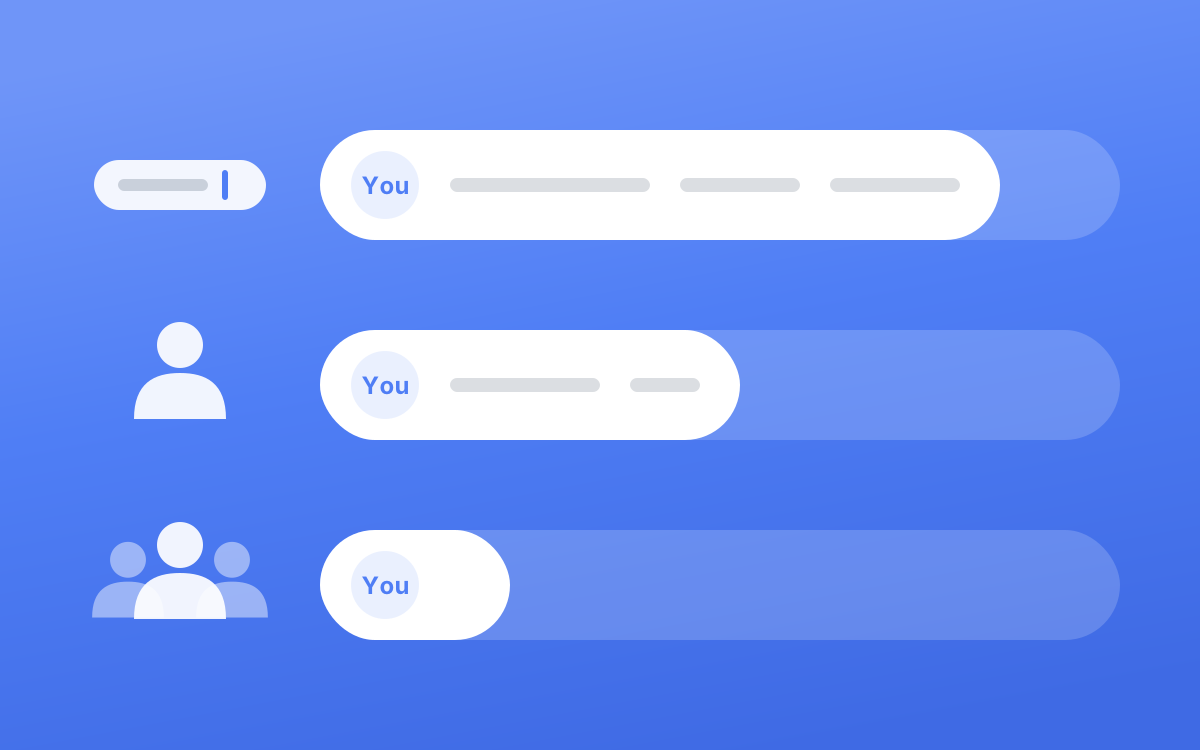
None of these runs without you. What changes is how much of your week it takes.
- With an AI tool, you come up with every idea, write the prompt, edit the draft, post it and answer the comments.
- With a freelancer, you share ideas on a call, review drafts and handle everything that happens after a post goes live.
- With an agency, you sit for the interview and approve the work. You still take the sales calls, and nobody should do that part for you.
Questions to ask before you hire a ghostwriter or agency#
Ask these on the first call. The answers tell you more than sample posts do, because samples are hand-picked.
| Ask | A good answer | A red flag |
|---|---|---|
| Where will the ideas for my posts come from? | A regular interview with you | "We research your industry" |
| How do you capture my voice? | They study your real posts and calls, then write a voice guide you can read | "Give us three words for your tone" |
| Who writes, and who covers when they're away? | A named writer and a named backup | Nobody specific |
| What checks run before I see a draft? | A written checklist covering voice, facts and AI tells | "We proofread everything" |
| How do I approve, and how many edit rounds? | Drafts close to done, approved or tweaked in one place | "Unlimited revisions" as the headline |
| Does anyone like, comment or share for me? | No | Pods, engagement groups or boosts |
| If you run outreach, who approves each message? | A person approves every message, sent from your own account at a careful pace | Hundreds of invites a week that nobody reads first |
| What do I keep if we stop? | Your posts, voice guide, lead lists and CRM | "That's part of our system" |
| What do you report on? | Conversations and meetings with the right people | Impressions only |
Watch the revisions answer closely. A provider that leads with unlimited edit rounds is telling you it expects first drafts to miss.
For comparison, our answers at Blen are a monthly interview, a written voice guide, a checklist on every draft, approvals in the client's own app, and a person approving every outreach message sent from the client's own account.
Frequently asked questions#
Is it dishonest to use a LinkedIn ghostwriter?#
It's honest when the ideas, stories and opinions are yours. A ghostwriter who interviews you does what a speechwriter does, shaping what you actually said. It turns dishonest when a post claims experience you never had, so never approve a line you wouldn't say out loud.
Can AI replace a LinkedIn ghostwriter?#
AI is good at drafting and formatting a post. What it can't do is ask the follow-up question that turns a vague answer into a story, and that's most of a good ghostwriter's job. Plenty of ghostwriters use AI for first drafts, so the better question is who does the interviewing and the final edit.
Does LinkedIn penalise AI-written posts?#
LinkedIn says it's rolling out classifiers that spot AI slop and low-quality posts and show less of them in suggested content and in posts from outside your network. Its chief product officer also wrote that AI and slop aren't the same thing, since many people refine their thoughts with AI. A post built on your own material and edited until it sounds like you sits on the safe side of that line.
Should I hire a LinkedIn ghostwriter on Upwork?#
You can find good writers there, next to plenty who recycle templates. Put the questions from the table above to each one, and ask for a paid trial built from a short call with you rather than judging by samples. If the trial posts could have been written about anyone in your industry, keep looking.