What does a LinkedIn ghostwriter do? From interview to post
The interview, the voice work, the drafts and the checks, and why we swapped rounds of edits for a one-tap approval.

Founder of BlenUpdated 11 min read

On this page
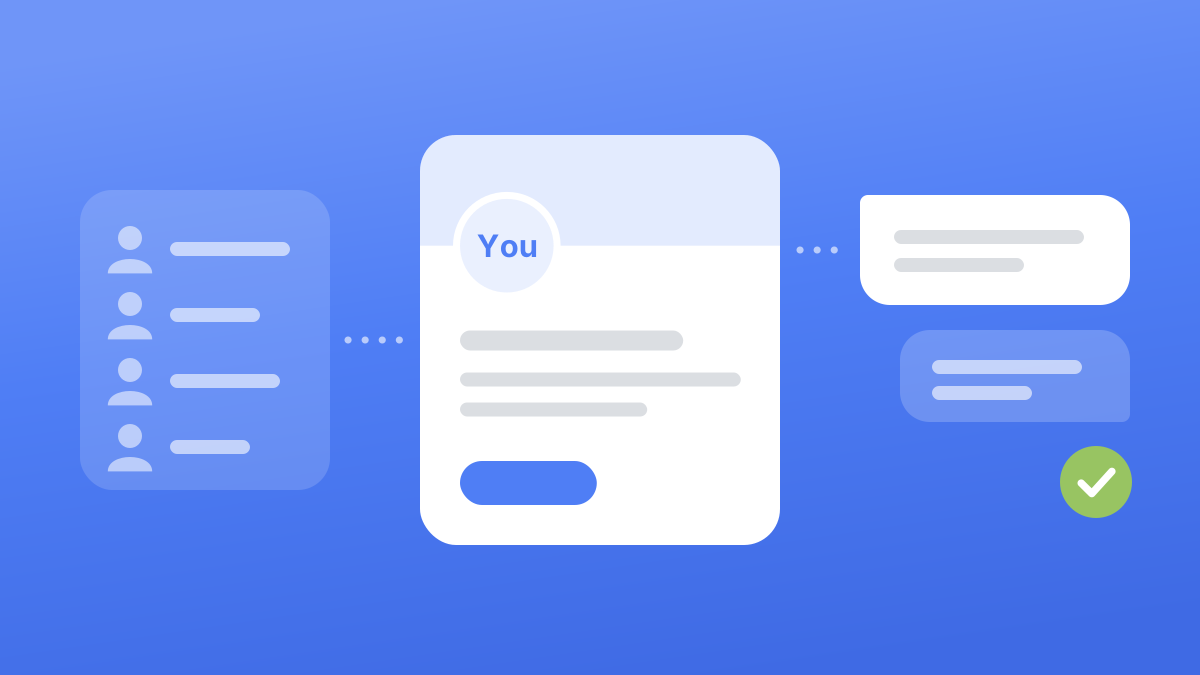
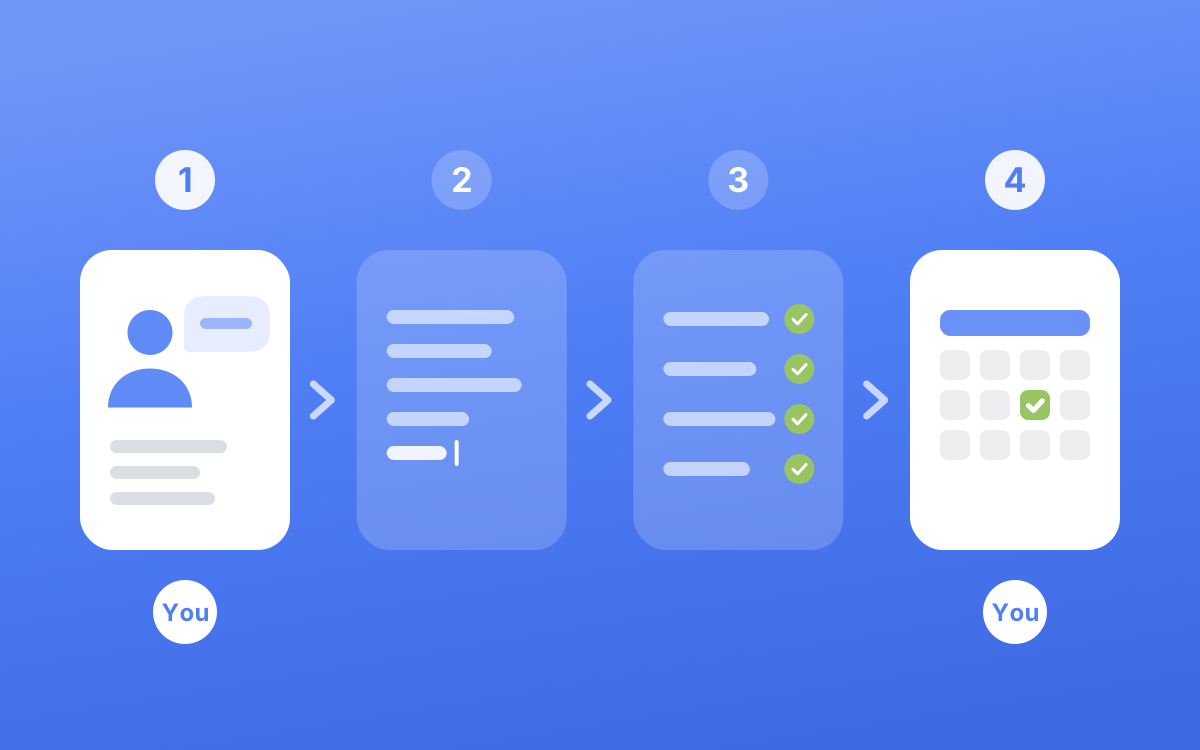
A LinkedIn ghostwriter turns your experience, opinions and stories into posts that go out under your name. The good ones do most of the work before a word gets written, because they interview you, learn how you talk, plan what to post, write it, check it and schedule it. Your part shrinks to one conversation a month and a quick read before each post goes live.
Below is how the job works step by step, the way we run it at Blen for founders, consultants and executives. It also covers the change that made our posts better, which was dropping rounds of edits.
What a LinkedIn ghostwriter does, in one table#
Most people picture a ghostwriter as someone who writes, but writing is only one stage of the job. Here is the whole of it, and what each stage asks of you.
| Stage | What the ghostwriter does | What you do |
|---|---|---|
| Interview | Asks the questions that pull out stories, opinions and numbers | Talk |
| Voice | Studies how you speak and write, and what you would never say | Nothing extra |
| Plan | Picks topics and post shapes that fit your audience and don't repeat | Nothing extra |
| Draft | Writes each post from your own words | Nothing extra |
| Check | Reviews every draft for clarity, flow, voice and AI tells before you see it | Nothing extra |
| Approve | Puts the finished post in front of you | Read it, tweak a word if you like, approve |
| Schedule | Publishes it on your posting days | Nothing extra |
| Learn | Carries what landed and what missed into the next interview | Say why a post missed |
If a ghostwriter's process has you writing briefs, filling in forms or rewriting drafts, the work in that table is quietly shifting back onto you.
The interview is the raw material#
A ghostwriter can't invent your substance. Every post should trace back to something you actually said, which is why the interview matters more than the writing.
The first interview#
The first call is about who you are and who you want to reach. The questions we ask on it look like this.
- Give me the 5 to 10 minute version of your life story, from the start to today.
- What's the simplest way to explain what you do?
- Who is your target audience, and what pain do they have?
- How do you solve it, and why should they trust you to?
- What would you like people to know you for?
- Which topics would your audience care about?
- Whose content do you admire?
The answers become the background file every later post draws on. They also give the writer a first real sample of how you talk when you're not being careful.
The monthly interview#
After that, one interview feeds a batch of posts. We always plan 12 posts per interview, one question per post, and your posting cadence decides how many weeks those 12 cover. Posting 3 times a week, that is a month. Posting twice a week, it lasts about 6 weeks.
Each question has to make sense on its own, because you might answer it weeks after it was written. The difference between a weak and a strong question is the setup.
| Weak question | Strong question |
|---|---|
| What's a hiring mistake you made? | In your first year you hired a senior salesperson before you had a pitch that worked. What did those months teach you about who to hire first? |
| What makes a good client? | You've turned down work from companies that could pay. What do you see in the first call that tells you to walk away? |
The strong versions set the scene first, the way a good interviewer does, so your memory lands on a real moment. A bare question gets a bare answer.
We also balance the batch. In every 3 posts, 1 is a personal story and 2 teach something. Personal stories tend to do better than teaching posts in the accounts we run, but they use up real anecdotes, and a story can only be told once.
Capturing your voice#
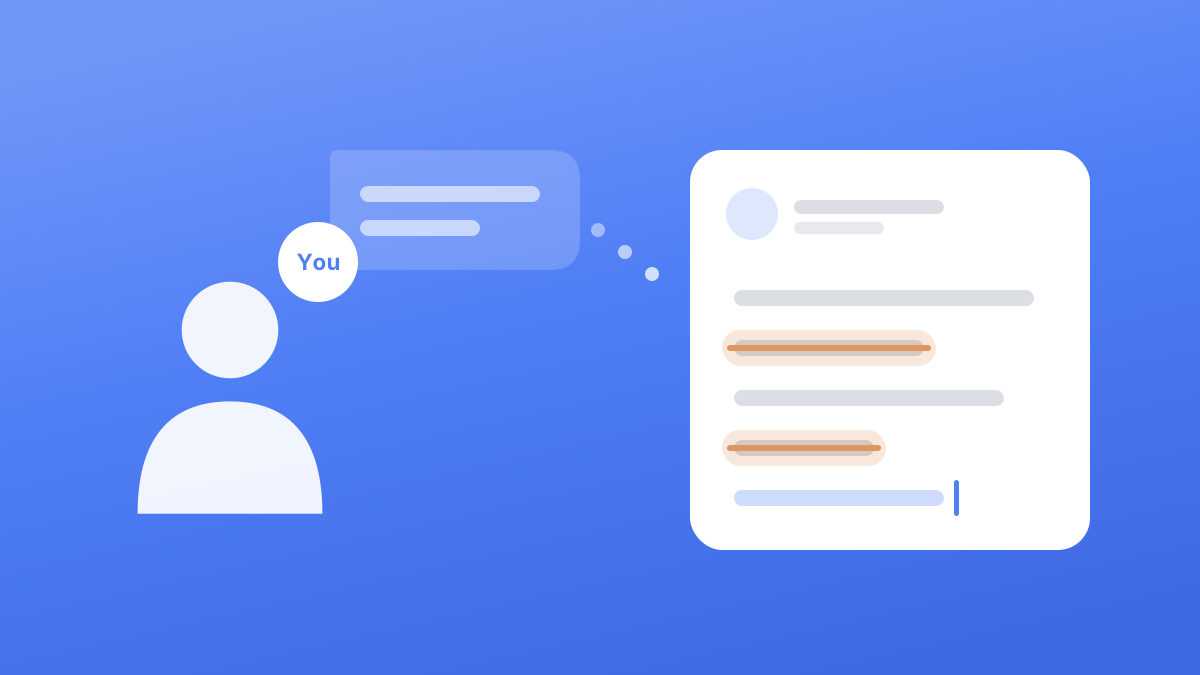
"Will it sound like me?" is the question every founder asks, and it is the right one, because a post that reads like anyone could have written it does your name no favours.
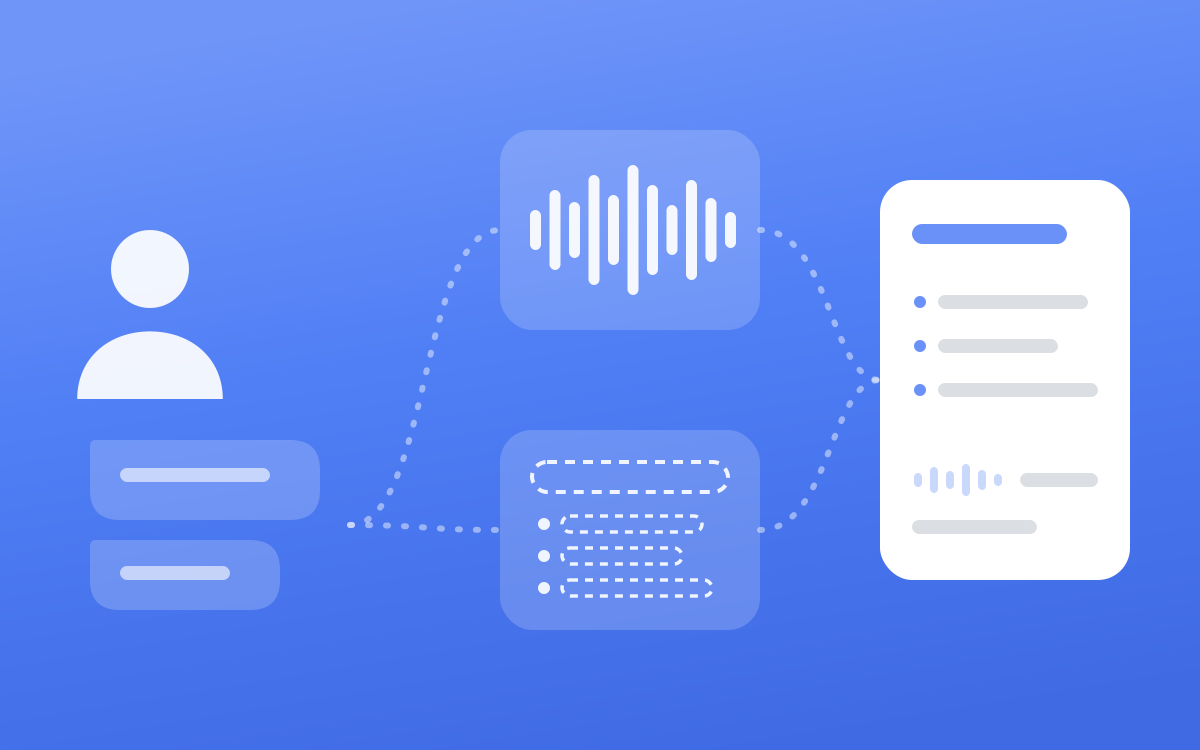
We keep 2 references apart, because they do different jobs.
- Your voice is how you sound. Your rhythm, the words you reach for, whether you write British or American English, the connectors you use, the things you'd never say. It comes from your real posts and the way you talk in interviews.
- Craft is what a well-built post looks like. A hook that stops the scroll, one idea per post, a clear shape. It comes from studying posts that already work.
Craft decides the opening move and the structure. Your voice decides the words. When the two pull apart, voice wins on wording and craft keeps the shape.
The line you would never publish#
There is one more voice rule, and it matters more than rhythm. Would you put every line of this post under your own name?
"You said it in the interview" is not the test. People say things out loud that they would never publish, like a health detail or a story about someone who never agreed to be in a post. A good ghostwriter keeps the point and drops that detail, without being asked.
Planning and drafting#
Planning starts with an audit of what you've already posted. Every past post is checked on 4 things (the topic, the hook, the main story and the opinion), because reusing any one of them makes a new post feel like a rerun.
Then the drafting follows a few rules we don't bend.
- Body first, hook last. Once the body is written, the most surprising part is obvious, and that becomes the opening line.
- The hook has to work above the fold. LinkedIn cuts a post off after a line or two with "see more", so whatever sits there decides if anyone reads on. We wrote a whole post on hooks and what dies before "see more".
- Posts run 150 to 300 words, long enough to say something real, short enough to finish on a phone.
- Every number names its source in the post. If a stat can't be backed by a credible, recent source, it comes out. Your own experience is its own source.
- Nothing is made up. No invented stories, quotes or stats. If the interview answer was thin, the fix is a follow-up question, never padding.
If you want the planning side in more depth, our guide to a LinkedIn content strategy for founders shows how one interview turns into a quarter of posts.
The check before you see anything#
Clients never see this step, and it is the one worth asking any ghostwriter about. Before a draft reaches you, it should already have the edits you would have made.
Our review runs as separate passes over the draft, each one looking for a different problem.
- Clarity. Could a stranger with no context follow it from line 1?
- Flow. Does every sentence pick up from the one before, or does the reader have to build the bridge?
- Voice. Could this sit among your real posts without standing out?
- Shape. Does the structure match the post it was modelled on?
- AI tells. Em dashes, colon setups like "Here's the thing", "it's not X, it's Y" contrasts, performed emotion, and words like "leverage" or "unlock".
- Judgment. Would you publish every line under your name?
The passes repeat until a full read changes nothing. If you use AI to write your own posts, we cover what gives them away in how to write LinkedIn posts with AI that sound human.
Why we stopped asking for edits#
For a long time, every post went back and forth. We sent a draft, the client sent notes, we rewrote it, and it went back again. Some posts took a week to approve.
That loop felt careful. In practice it was slow for our clients, and it pulled our attention away from the thing that matters most, which is writing a better post in the first place.
What we do instead#
- Once a month we interview you, and your stories, opinions and wins become the raw material.
- We turn that into your posts, written in your voice and checked before you see them.
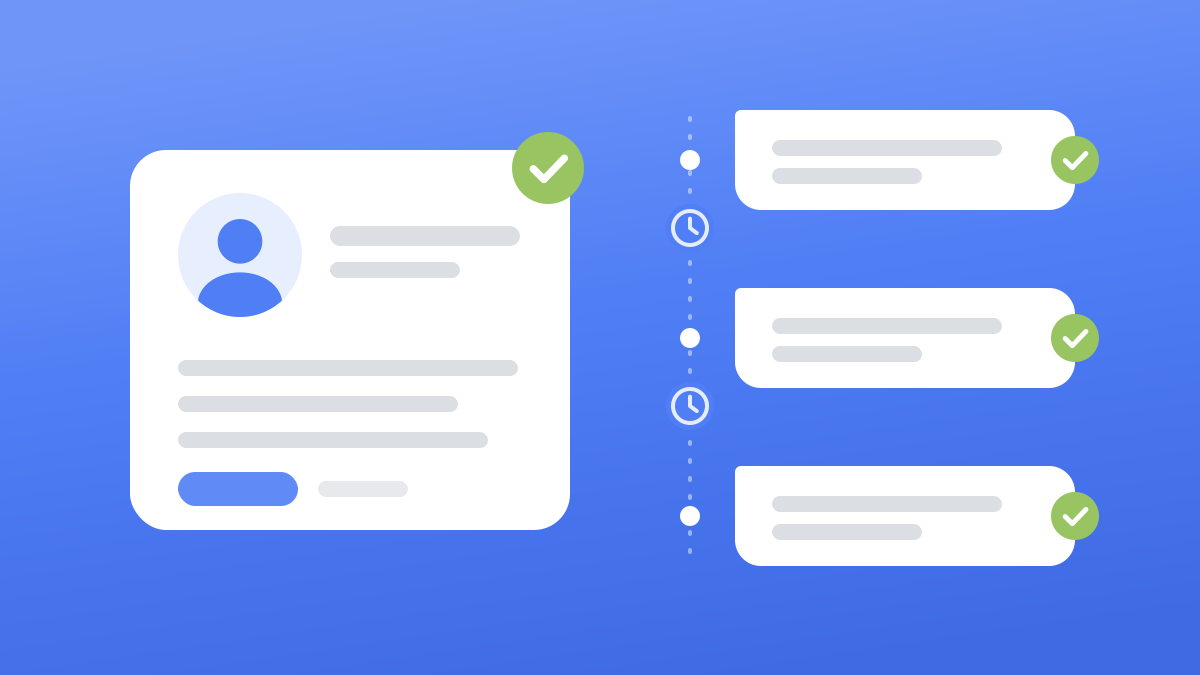
- You read each one in your own app. Change a word if you want to, then approve it in one tap.
- Once you approve it, we schedule it. There is no second round.
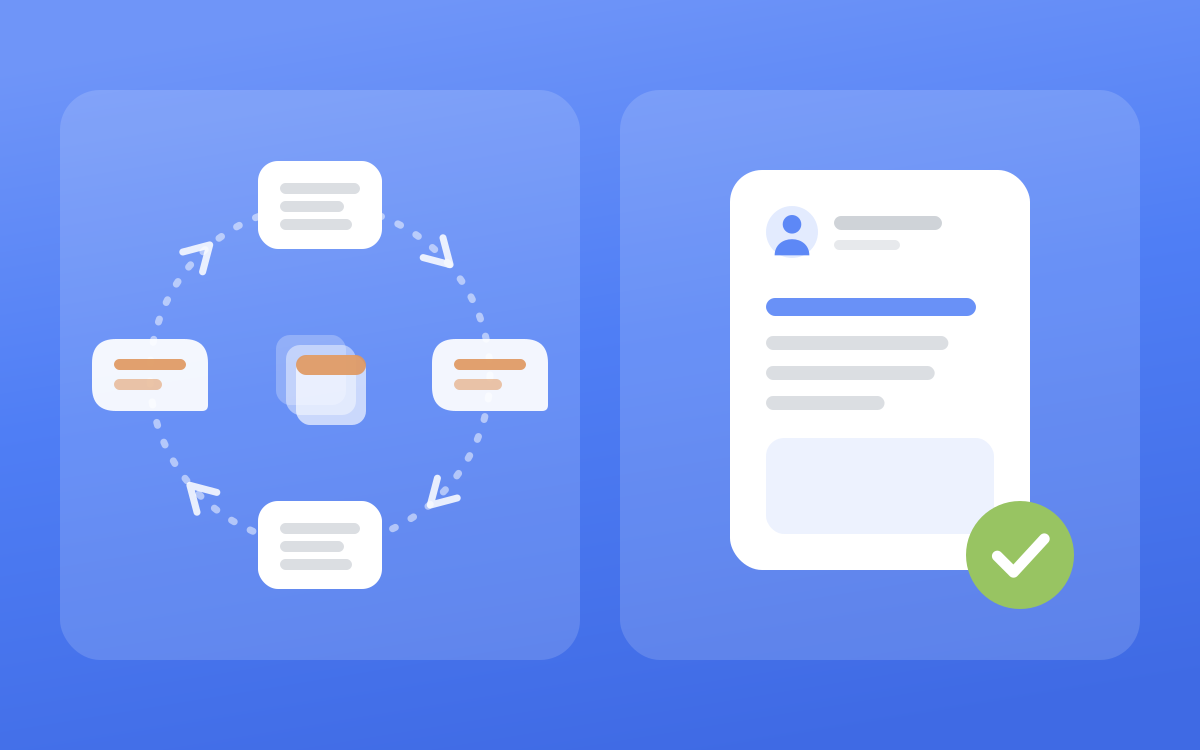
Edit rounds and one-tap approval, side by side#
| Edit rounds | Done with you | |
|---|---|---|
| Who makes a one-word change | You write a note, the writer rewrites | You change it yourself |
| Time to fix a small thing | A round trip, often days | Seconds |
| What you manage | A feedback thread per post | One read per post |
| Where the writer's week goes | Rewriting old drafts | The interview, the ideas, the writing |
| When a post misses | The same post gets reworked | The reason goes into next month's interview |
Why the posts got better#
Speed helped, but the bigger change was where the effort went. When the week isn't spent on rewrites, it goes into sharper interview questions and more careful drafts, and that is where good posts come from.
Feedback also travels further this way. A note on one post used to fix one post. Now, if a post misses the mark, you tell us why and it goes into the next interview, so the fix shows up across the next 12 posts instead of one.
It is still your voice and your name on every post, and you still decide what goes out. You just don't have to manage a feedback thread to get there.
What you still do yourself#
Done with you means there is a part that stays yours, and it is small on purpose.
- One interview a month. This is the one thing that can't be delegated, because it is where the substance comes from.
- A read before each post goes out. Tweak a word, approve, move on.
- Replies to comments. People commenting on your post want to hear from you.
- A heads-up when something big happens. A new client win or a hard lesson makes a better post than anything planned a month ago.
This is worth the time. In the 2024 Edelman and LinkedIn B2B thought leadership report (opens in a new tab), 52% of decision-makers and 54% of C-suite executives said they spend an hour or more each week reading thought leadership content, so the hour a month you give your ghostwriter goes in front of people who are already reading.
Questions to ask before you hire a LinkedIn ghostwriter#
Use these on any sales call, with us or anyone else.
- Where does the substance come from, an interview with me or their own research?
- How do they learn my voice, and what do they do when a draft doesn't sound like me?
- How many edit rounds are there, and can I make small changes myself?
- What do they check before a draft reaches me?
- Do they schedule the posts, or send me text to paste?
- What happens after people read the posts? Does anything turn readers into conversations?
Ask the last one on every call. Posts build attention, and attention only turns into clients when the profile converts and someone follows up. That is why at Blen the posts sit alongside a rewritten profile and outreach from your own account, with a person approving every message. If you are weighing your options, we compared a freelance ghostwriter, an agency and AI tools side by side.
Frequently asked questions#
Is it fake to use a LinkedIn ghostwriter?#
Not when the ideas, stories and opinions are yours. A ghostwriter shapes what you said into a post, the way an editor shapes a book, and you approve every line before it goes out. It becomes a problem when a writer invents experiences you never had, which is why every post should trace back to your own interview.
How much time does a LinkedIn ghostwriter need from me?#
With a done-with-you setup, one interview a month plus a quick read of each post before it's scheduled. If a ghostwriter needs written briefs, long feedback notes or several rounds of edits per post, expect a lot more of your time.
Do LinkedIn ghostwriters post for you?#
Some hand you finished text to paste into LinkedIn yourself, others schedule it for you. We schedule each post once you approve it, so nothing goes out that you haven't seen.
Can a ghostwriter really sound like me?#
Yes, if they work from your own words and study how you actually talk. It takes a proper first interview, your real past posts as a reference, and a check on every draft against them. A writer working from a questionnaire alone usually ends up sounding like everyone else.
How much does a LinkedIn ghostwriter cost?#
It depends on what's included, from a freelancer writing posts to an agency covering interviews, profile and outreach. We broke down what LinkedIn ghostwriters cost and what the fee should include, plus the hidden costs like your own time.