LinkedIn first message after connecting: what to send
Someone accepted your invite. What you send next decides whether a conversation starts. Match their effort, keep it short, leave the pitch out.

Founder of BlenUpdated 11 min read
On this page
Send a short message within a working day or two that says who you are in one line and asks one easy question. Before you write it, read what they sent when they accepted, because your opening should match it. Silence gets a normal opener, a greeting gets a greeting back, and a real note gets a real answer. Leave the pitch out.
Everything here comes from the outreach we run for B2B founders and consultants from their own LinkedIn accounts, where a person reads every message before it goes out. Below are the rules, a template for each case, and the small mistakes that end a conversation before it starts.
Why the first message after connecting matters most#
Accepting a request costs someone one tap. The first message is where that connection turns into a conversation, or quietly becomes one more name in your network.
It is also where most replies come from. In Belkins' LinkedIn outreach study (opens in a new tab), campaigns that messaged people who were already connected got a 12.2% total reply rate, with 8.7% coming from the first message and 3.5% from everything sent after it. Follow-ups still count, but the first message does most of the work.
If you are still deciding whether to add a note to the invite itself, that is a separate question, covered in how to write a LinkedIn connection request message. This post starts once they have said yes.
Read what they sent before you write anything#
Open the thread first. Some people write something when they accept, and a template dropped on top of a message they wrote tells them nobody read it.
There are four cases, and each one opens differently.
| What they sent | What it tells you | How your message opens |
|---|---|---|
| Nothing | They accepted, and that's all | Your normal opener, "Thanks for connecting." |
| A wave, an emoji or a thumbs up | A courtesy, with nothing to answer | Same as nothing. Don't mention the emoji. |
| A greeting in words, like "Great to connect" | They were polite | One short greeting back, in place of your opener |
| A real note, like a question, a joke or a line about their work | They started the conversation | Answer that first in a sentence or two, then carry on |
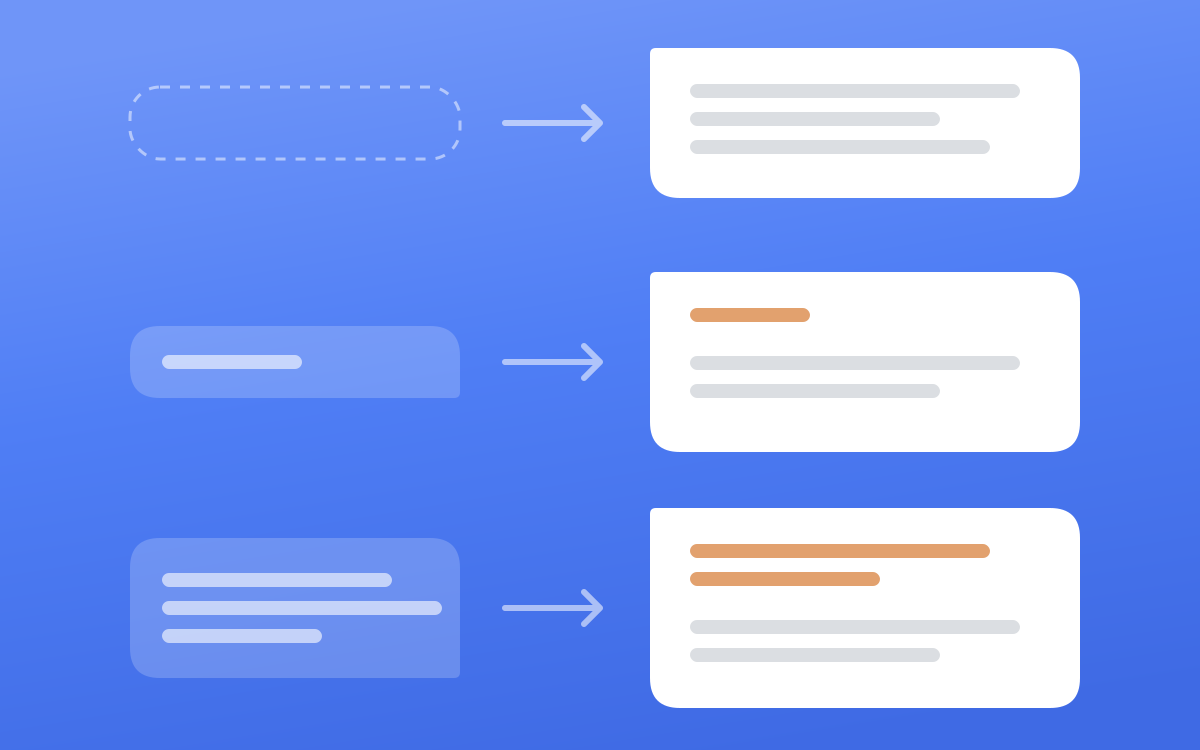
The rule behind the table is to match their effort. Someone who wrote three thoughtful lines and gets a pasted template feels ignored. Someone who sent a single wave and gets "Ha, love the wave" feels handled. Either way the conversation tends to stop right there.
What to send when they accept and say nothing#
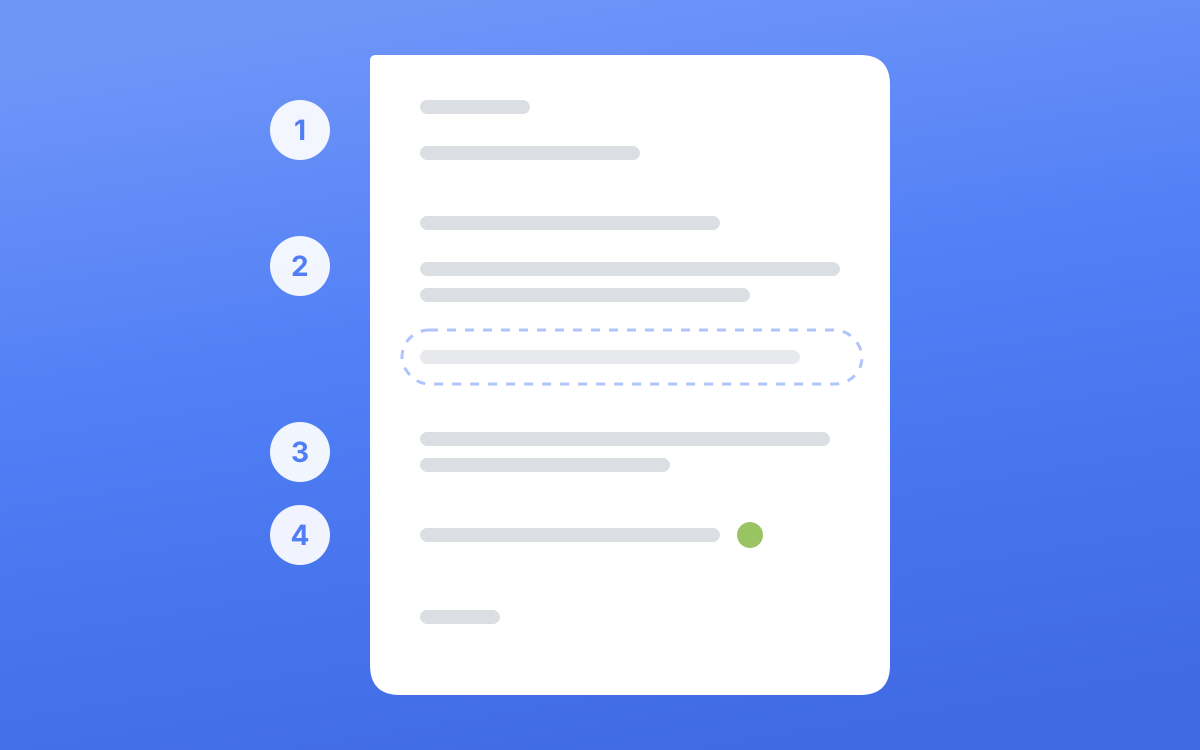
This is the most common case, and the one where structure helps most. Our first messages follow the same four beats, each in its own short paragraph.
- A greeting. Their first name on its own line, then "Thanks for connecting."
- Who you are. "I thought I'd briefly introduce myself," then your role, your company and what it does in plain words, with one optional proof line after it.
- Why them. One sentence on why the two of you should talk, naming their company or role.
- One soft ask. A question that is easy to say yes to, with no link.
Then sign off with the name you actually sign with. Here is the template.
[First name],
Thanks for connecting.
I thought I'd briefly introduce myself.
I'm the founder of [company], a [what it does, in one plain line].
[Optional proof, for example: So far we've worked with 40+ mid-size logistics firms across Europe.]
Given what you're building at [their company], I think there's some overlap, and it would be worth connecting properly.
Open to a brief call sometime this week or next?
[Your name]
Filled in, that comes to between 60 and 110 words. It is the longest message in the whole sequence, and the follow-ups after it are a line or two each.
Why each beat is there#
The intro answers the question every new connection has, which is who this is and why they are writing. A first message that opens with a question about their business, and no introduction, leaves a stranger guessing who is asking. We don't write question-only openers for that reason.
Say your role and company literally. "Founder of a freight software company for mid-size carriers" can be placed in two seconds, while "I help companies grow" can't be placed at all. Keep it consistent with your headline, because anyone curious will click through to your profile to check. If yours still reads vague, work through this LinkedIn profile checklist for founders first.
The proof line is optional. If you have a number that makes you credible, use the strongest one. If you don't, leave the line out instead of padding it.
The bridge is the reason this message isn't going to everyone, so name their company or role where the template says "what you're building." That is the one place to personalise. Stacking five details from their profile reads like research done at them.
The ask is a single soft question with no link. A calendar link in a first message asks a stranger to do admin for you before they know who you are.
A lighter ask if a call feels like too much#
Some people respond better when the first message asks for less. Keep the same structure and change only the last line.
Would be good to compare notes at some point, if you're open to it.
If you have a real reason to meet, like being in their city this month, use that instead. A real trip beats a generic ask. Never invent one.
What to say when someone says "thanks for connecting"#
A greeting in words deserves a greeting back. Put one short line where your "Thanks for connecting" would have gone, and drop any line their message already covered.
Sam,
Good to be connected too.
I thought I'd briefly introduce myself.
I'm the founder of [company], a [what it does].
The rest of the message carries on exactly as the template does. Short greetings that work here are "Likewise, Sam." or "Good to be connected too."
Two things to avoid. Don't skip their greeting and open cold, as if they hadn't written. And don't answer "Great to connect" with "Thanks for connecting," which just repeats them back to themselves.
If you aren't reaching out about anything and only want to be polite, the one-line reply is enough on its own.
How to reply when their note says something real#
A real note is a question, a joke, an opinion or a line about their work. Meet it first, specifically, in the tone they used, and then carry on with your message. A joke gets a real line back, a question gets a straight answer, and a point gets a reaction to that point.
Keep the acknowledgement small. One plain sentence that shows you read what they said, the way a busy person would reply in passing. It shouldn't turn into a comeback, a clever reframe or an explanation. If a line could go without the message losing anything, cut it.
| Their note | Too much | Too little | About right |
|---|---|---|---|
| "Saw you're in Lisbon too. Going to the fintech meetup next week?" | "Ha, love that! Lisbon's scene is on fire right now and these meetups are where the magic happens." | "Thanks for your message." | "Not this time, but I'd like to hear how it goes." |
| "Accepted mostly because your headline made me laugh." | "Ha, thank you! I spent ages on that headline, so that genuinely means a lot!" | "Cheers." | "Glad it did its job." |
| "Curious why you reached out, we're not really in your space." | A long paragraph on everything your company does | "Just wanted to connect!" | "Fair question. We work with [type of company], and the way your team handles [specific thing] caught my eye." |
"Thanks for your message" is the easy miss. It reflects the fact that they wrote something, not what they wrote, so it lands the same as no acknowledgement at all.
Here is how the whole thing reads with the acknowledgement in place.
Maria,
Not this time, but I'd like to hear how it goes.
I thought I'd briefly introduce myself.
I'm the founder of [company], a [what it does].
Given the payments work you're doing at [their company], I think there's some overlap worth a proper conversation.
Open to a brief call sometime this week or next?
[Your name]
If they messaged you first#
Sometimes a new connection writes before you do, with a question or a proper hello. Treat that as a reply. Answer what they said, then introduce yourself.
The mistake is sending your standard first message as if the thread were empty. When we find a new connection who has already written, they skip the first-message queue and go into reply handling instead.
A wave or a thumbs up is not a reply#
An emoji, a thumbs up or a lone "thanks" is a courtesy. There's nothing in it to answer, so open exactly as you would if they had sent nothing. Don't write "Love the wave" or "Noticed your emoji," which reads like a script trying to sound human.
The same goes later in the conversation. If they answer your first message with only a thumbs up, that isn't interest yet. Treat it as no reply and let your next follow-up go out when it was due. How to write those follow-ups is its own topic.
Don't pitch in the first message#
A pitch is anything that asks them to care about your offer before they have shown any interest. Saying who you are and what your company does doesn't count.
- A list of services or features
- A price, a discount or a "few spots left" line
- A deck, a case study or a calendar link
- A diagnosis of their problem, like "Most teams your size struggle with..."
- More than one ask
The offer comes once they show interest. When someone answers your soft ask with a yes, the next message is a hand-off, and it stays short.
Great to hear, [first name].
What's the best email to reach you on? I'll follow up from there to set up a quick call.
Timing, length and format#
When to send it#
Send it within a working day or two of them accepting, during working hours. The acceptance is still fresh and your name still means something to them. A message that arrives at 3am their time looks like software sent it, whether or not it did.
How long it should be#
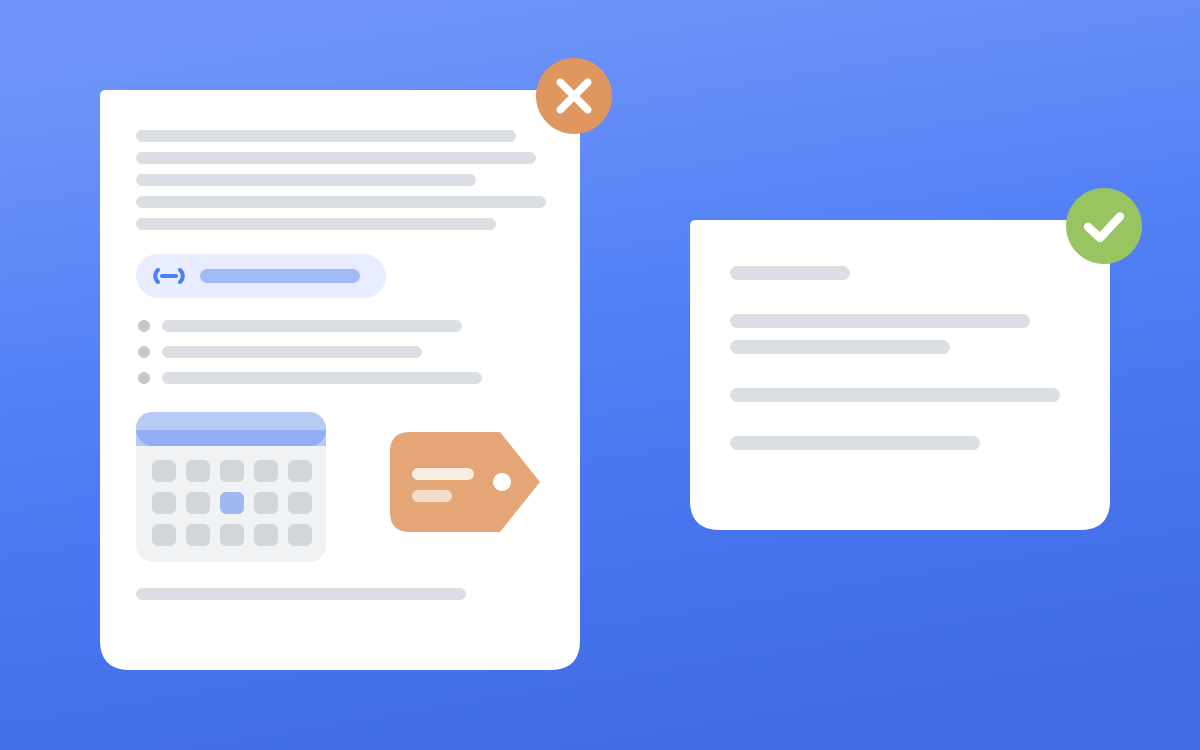
Aim for 60 to 110 words. That is enough to say who you are and why you're writing, and short enough to read on a phone in one go.
How it should look#
- The greeting on its own line
- A blank line between every thought, never one dense block
- The sign-off on its own line
- No exclamation marks, and no "Ha", "love this" or "excited to"
- Their real first name, checked by hand
A leftover "{first_name}", a surname in capitals or "Dr. Jane Smith, MBA" pasted in whole ends the conversation before they reach your second line. Use the first name only.
Keep your account safe while you do this#
A personal message to someone who just accepted is about as low-risk as outreach gets, but volume changes that. LinkedIn's spam policy (opens in a new tab) counts "excessive, irrelevant, or repetitive comments or messages" as spam. Its page on invitation restrictions (opens in a new tab) lists sending many invitations in a short time, and invitations being "ignored, left pending, or marked as spam by the recipients," as reasons you can be restricted.
So pace it like a person would. On the accounts we run, first messages are capped at 15 a day per account, spaced minutes apart and sent in working hours, and a person approves every one before it goes. The same text fired at hundreds of people in an afternoon is the pattern to stay away from. There is more on the risks in is LinkedIn automation safe.
A quick check before you hit send#
- Did you read the whole thread, including anything they sent when they accepted?
- Does your opening match the effort they put in?
- Is their first name right, and is it only their first name?
- Does one line say your role and company in plain words?
- Is there at most one proof line?
- Is there exactly one question, and no link?
- Could you delete any sentence without losing something? Then delete it.
- Would it look normal on a phone screen?
Frequently asked questions#
Should you send a message after connecting on LinkedIn?#
Yes, if you connected for a reason. A short message that says who you are and why you reached out is what turns a connection into a conversation. If you accepted someone else's request and have nothing to add, a one-line thank you is plenty.
How long should you wait to message someone after they accept?#
Aim for the next working day, two at most. Wait much longer and the moment passes, so your message arrives from a name they no longer place. Send it during working hours.
What do you say when someone says "thanks for connecting"?#
Say one short thing back, like "Likewise, Sam" or "Good to be connected too." If you are reaching out about business, that line replaces your usual opener and the rest of your message follows. Don't repeat "thanks for connecting" back to them.
Is it OK to ask for a call in the first message?#
A single soft question is fine once you have said who you are and why you are writing, for example "Open to a brief call sometime this week or next?" A calendar link, a list of time slots or a pitch wrapped around the question is where it goes wrong. If a call feels like too much, ask to compare notes instead.
What if they don't reply to your first message?#
Send a one-line follow-up a few days later, then one gracious close, and stop. The close can be as simple as "No worries if the timing isn't right. Happy to connect another time," which leaves the door open. The full LinkedIn outreach sequence shows how every message fits together.