LinkedIn outreach message templates for the whole sequence
Five short messages in order, with the reasoning behind every line and the mistakes that quietly kill replies.

Founder of Blen11 min read
On this page
A LinkedIn outreach sequence that starts real conversations is five short messages. You send a connection request with no pitch, then a first DM that says who you are and asks one soft question. If they stay quiet, a one-line follow-up goes three days later and a polite close a week after that. If they say yes, you reply by asking for their email.
Below are the templates for each one and the reasoning behind every line. We write these sequences for B2B founders and consultants at Blen, and the wording changes for every client while the shape stays the same.
The sequence at a glance#
| Step | When it goes | Length | Its only job |
|---|---|---|---|
| Connection request | Day 0 | Blank, or under 200 characters | Get accepted |
| First DM | When they accept | 60 to 110 words | Say who you are and ask one soft question |
| Follow-up 1 | 3 days later, no reply | One line | Make saying yes cheaper |
| Follow-up 2 | A week after that, no reply | Two lines | Close the door politely, then stop |
| Reply | They say yes | Two lines | Get their email and move off LinkedIn |
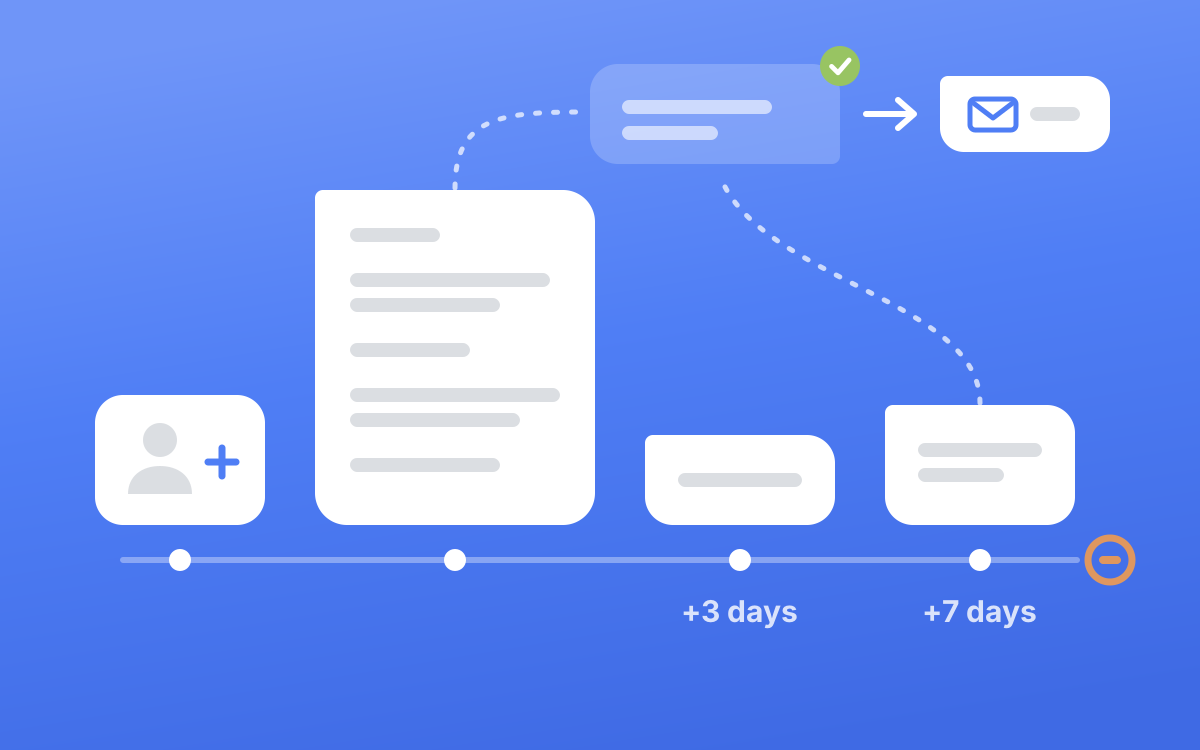
Someone who never answers hears from you four times, counting the request, and then you stop.
The reason to keep it that short is how few people answer at all. Belkins, an outreach agency, published the funnel from its own LinkedIn campaigns (opens in a new tab): 18.7% of invited prospects accepted the connection request, 17.6% of those replied to follow-up messaging, and 1.3% of connected prospects booked a meeting. The quiet people are most of your list, and every extra nudge lands on them.
The connection request template#
The request has one job, getting accepted, so keep selling out of it. LinkedIn's own Professional Community Policies (opens in a new tab) say "Do not use our invitation feature to send promotional messages to people you don't know."
Whether to add a note is unsettled. Belkins found (opens in a new tab) requests with a personalised note got an 8.2% reply rate against 5.3% without one. Waalaxy, which sells outreach software, analysed over 64 million campaigns (opens in a new tab) and found the reverse, a 15% response rate with a note and 20% without.
Notes are also rationed on free accounts. LinkedIn's Help Center says free members can personalise three requests a month (opens in a new tab) on one page and five (opens in a new tab) on another, at 200 characters each, while Premium notes can run to 300. Our guide to the connection request message goes through the options in detail.
A sensible rule is to send the request blank unless you have a specific reason they would recognise. When you do, keep it to that reason.
Hi [First name], I saw your talk on [specific topic] at [event]. I work with [type of company] on [problem], so thought it was worth connecting.
Before any request goes out, make sure the person isn't already one of your connections. We park any lead a client is already connected to, because a cold script sent to someone who knows you reads worse than silence.
The first DM: four beats, one paragraph each#
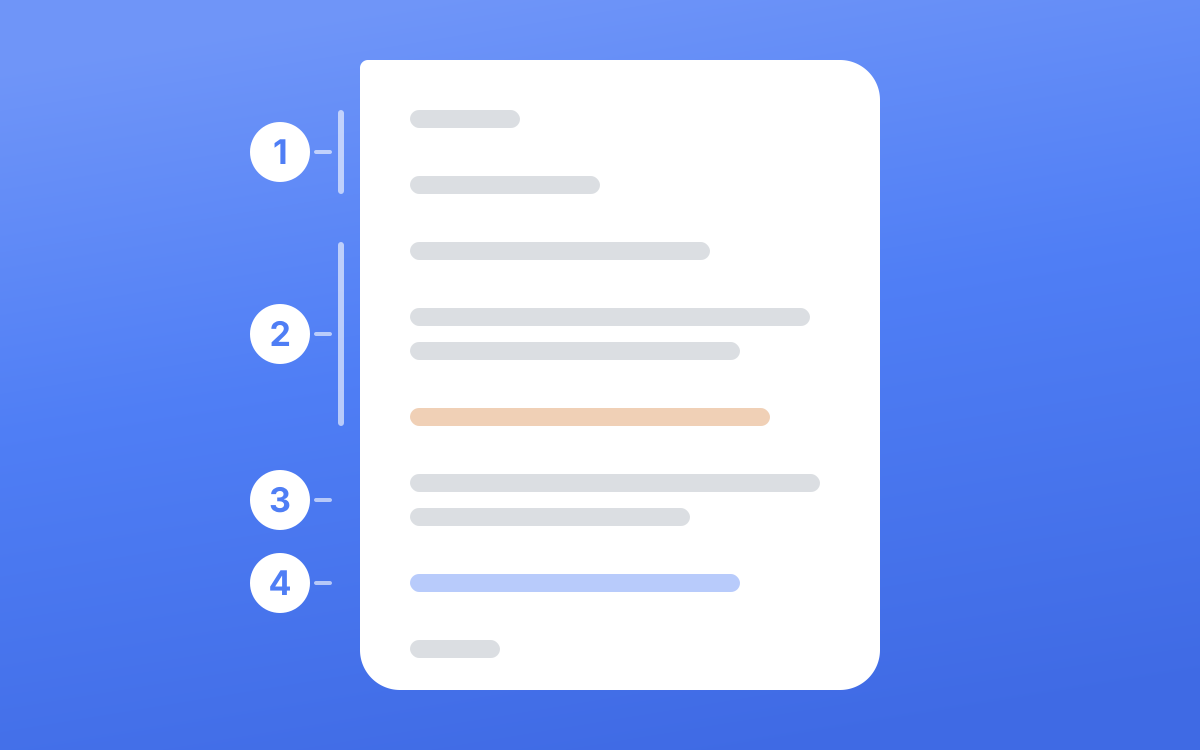
When they accept, send the first message. It is the longest in the sequence, 60 to 110 words, and it does four things in this order, each in its own paragraph with a blank line after it.
- Their name, then a thank-you for connecting.
- Who you are, literally. "I thought I'd briefly introduce myself," then your role, your company and what the company does in plain words. Add one proof point if you have a hard one.
- The bridge, one sentence on why you're writing to them in particular.
- One soft ask, with no link.
Sign off with your first name, the way you actually sign messages.
Template#
[First name],
Thanks for connecting.
I thought I'd briefly introduce myself.
I'm the [role] of [Company], [what the company does, in plain words].
So far, we've [one proof point you can back up].
Given what you're working on at [their company], I think there's real overlap, and it would be worth connecting properly.
Would you be open to a short call this week or next?
[Your first name]
A made-up example#
Here is the template filled in for an invented fractional CFO writing to a founder who just raised a round.
Dana,
Thanks for connecting.
I thought I'd briefly introduce myself.
I'm a fractional CFO for B2B software companies between seed and Series B.
So far, I've run the finance side of eleven fundraises, most of them Series A.
Given you're building out the finance function after your raise, I think there's some overlap, and it would be worth a proper conversation.
Would you be open to a short call this week or next?
Sam
Why each beat is there#
- The introduction comes before any question because a stranger who just accepted has no idea who is asking. A first DM that is only a question makes them work that out before they can answer.
- Role and company are stated literally, because a reader can place "I'm a fractional CFO for B2B software companies" in a way they never can with "I help founders grow."
- One proof point is enough. Three starts to read like a brochure.
- Each beat gets its own paragraph, because a dense block looks pasted.
- There is no pitch and no link, because they haven't shown any interest yet.
Changing the ask#
The ask is the one part worth varying. The skeleton stays the same and only the last line changes.
| Ask | Use it when | Last line |
|---|---|---|
| A call | By default | "Would you be open to a short call this week or next?" |
| A coffee | You really will be in their city on known dates | "I'm in [city] the week of [date]. If you're around, it would be good to meet for a coffee." |
| Comparing notes | You'd rather not sell hard, or they're a senior peer | "Would be good to compare notes at some point, if you're open to it." |
Never invent the trip. The moment they say yes, a made-up one falls apart.
When they message you first#
Sometimes a person accepts and writes something before you do. The first DM still goes out, but it has to answer them first, and the size of that answer should match what they gave you.
- If they sent a wave emoji or a thumbs-up, there's nothing to acknowledge. Send the first DM as written and leave the wave alone.
- If they sent a greeting in words, like "Great to connect," reply with one short greeting such as "Likewise, [First name]." in place of your "Thanks for connecting" line.
- If they wrote a real note, a question or an opinion or a line about their work, answer that first in one plain sentence and in their tone. Then carry on with the DM and drop any line their note already covered.
Keep the acknowledgement to one sentence that shows you read it, the way a busy person replies in passing. Say they wrote "Thanks for reaching out, we're halfway through rebuilding our finance reporting so the timing is funny." You open with "Sounds like a busy quarter with the reporting rebuild," then the introduction, bridge and ask.
Someone who wrote three thoughtful lines and gets a pasted template feels ignored. Someone who sent an emoji and gets "love the wave" feels handled. Our post on the first message after they accept covers this one message in more depth.
Follow-up templates for when they don't reply#
Follow-up 1: three days later, one line#
Hi [First name],
Just wanted to follow up. Would a quick 20-minute call work?
[Your first name]
It repeats the ask in fewer words and makes it smaller, with no re-pitch and no apology for following up. If you have one short case study that fits their situation, this is the one place a link belongs.
Follow-up 2: a week later, the close#
Hi [First name],
No worries if the timing isn't right. Happy to connect another time.
[Your first name]
That is the whole message, and it is the last one. It takes the pressure off and leaves the door open for when their timing changes. After it, stop, with no third follow-up and no "just bumping this." Our LinkedIn follow-up guide covers spacing and when to stop in more detail.
Read the thread before any follow-up#
Check the actual conversation before a follow-up goes, not just your spreadsheet or CRM status. Trackers drift. We have seen a sheet say a first DM went out when the thread was empty, and a "just following up" on an empty thread makes no sense to the person reading it.
- If the thread is empty, send the first DM, not a follow-up.
- If they replied with anything real, they get an answer and never a follow-up.
- If they sent a thumbs-up or "thanks," that's courtesy rather than a reply, so the sequence carries on.
Reply templates for when they answer#
Replies come in a handful of kinds, and each has one right move.
| They said | What you do | Template |
|---|---|---|
| Yes, or anything warm | Ask for their email and move off LinkedIn | "Great to hear, [First name]. What's the best email to reach you on? I'll follow up from there to set up a quick call." |
| A real question | Answer it yourself, in your own words | None. A real question deserves a person. |
| Not now, or no | Close politely and stop | "Understood, thanks for letting me know. Happy to pick this up if things change." |
| Wrong person | Mark it and move on | No message needed |
| A thumbs-up or "thanks" | Keep them in the sequence | The next follow-up, when it's due |
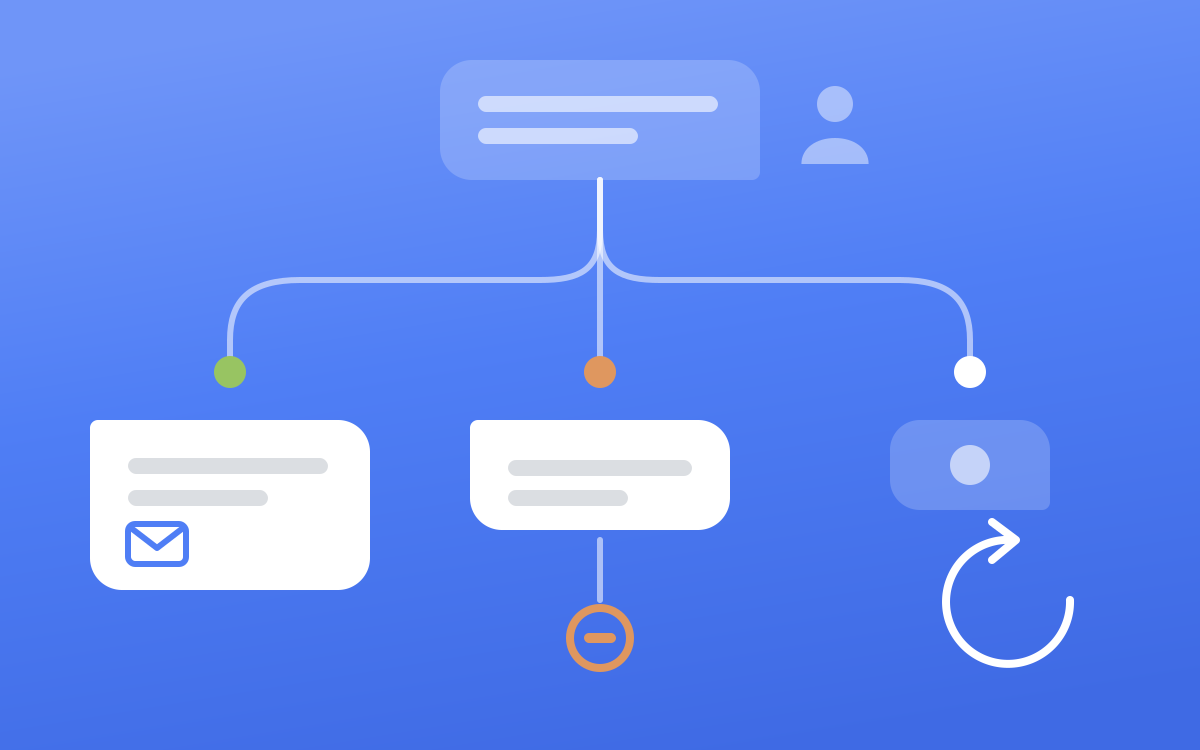
Keep the yes reply to the email question. Leave out the calendar link, the list of times and the paragraph diagnosing their problem. The email is the win, and the call gets booked from there.
And never answer a reply with a no-reply follow-up. Sending "Just wanted to follow up" to someone who wrote to you yesterday tells them nobody read their message.
What never goes in an outreach message#
This list comes from drafts we've thrown out.
- An offer to record them a video or a teardown before they've asked for anything.
- A vague identity line such as "I work on the growth side of things."
- Commentary about their inbox, like "I know you're busy so I'll keep this short."
- A calendar link, or "send me a few times that work," before they've said yes.
- Filler like "Ha," "love" and "excited," or exclamation marks.
- Em dashes, which we strip from every message as a house rule.
- Any mention of an agency or "on behalf of." If someone writes your messages for you, the message still comes from you.
Pace it so your account survives#
LinkedIn's Help Center (opens in a new tab) lists the reasons it restricts invitations, including "You've sent many invitations within a short amount of time" and "Many of your invitations have been ignored, left pending, or marked as spam by the recipients." The same page warns that if you send an excessive number of invitations and LinkedIn suspects an automation tool, it may suspend or restrict the account.
These are the limits we run every client account on.
- About 15 to 20 connection requests a day, a few minutes apart, during working hours.
- At most 15 first DMs and 20 follow-ups a day from any one account.
- Invites still pending after three weeks get withdrawn, so ignored requests don't pile up.
- One account is never worked from two tools or two people at once, which is how leads end up messaged twice.
- A person reads every message before it goes, because a template can't tell when the conversation has moved on.
If any software touches your sending, read is LinkedIn automation safe before you start.
A pre-send checklist#
- The lead isn't already one of your connections.
- The first DM has four beats, one paragraph each, with your role and company stated literally.
- There's one ask, with no link and no calendar.
- Anything they wrote first has been answered, in proportion.
- The live thread shows no reply before a follow-up goes.
- Follow-up 2 is the last message.
This is the sequence we write for clients at Blen and send from their own accounts, in their words, with a person approving each message. The messages only work on a list of real buyers and a profile worth checking, and how to get clients on LinkedIn covers the rest of that system.
Frequently asked questions#
How long should a LinkedIn outreach message be?#
The first DM is the longest message in the sequence, and 60 to 110 words fits a thank-you, who you are, why them and one question. Follow-ups should be a line or two. If a message needs scrolling on a phone, cut it.
Should I pitch in my first LinkedIn message?#
No. Say who you are and ask one soft question, and save the offer for after they've shown interest. LinkedIn's Professional Community Policies (opens in a new tab) also tell members not to use invitations to send promotional messages to people they don't know.
How many follow-ups should I send on LinkedIn?#
Two. Send a one-line nudge three days after the first DM and a polite close a week after that, then stop. Anyone who replied with something real gets an answer instead of a follow-up.
What reply rate should I expect from LinkedIn outreach?#
It depends heavily on the list and the message. In Belkins' own campaigns (opens in a new tab), 17.6% of prospects who accepted a connection request replied to follow-up messaging, and 1.3% of connected prospects booked a meeting. Treat any vendor benchmark as rough, since each one comes from that company's own campaigns.
Should I add a note to my connection request?#
The big datasets disagree. Belkins (opens in a new tab) saw a higher reply rate with a note (8.2% against 5.3%), while Waalaxy (opens in a new tab) saw a higher response rate without one (20% against 15%). Free accounts only get a few notes a month anyway, so save them for people you have a real reason to contact.