LinkedIn content strategy for founders: a one-page plan
How we turn one interview into 12 LinkedIn posts, with the one-page plan we use and the numbers worth watching after.

Founder of Blen12 min read
On this page
A LinkedIn content strategy for founders fits on one page. It says who the posts are for, which three topics you own, how often you post, and where the material for every post comes from. Most founder plans cover the first three and skip the last one, and that's usually where they stall.
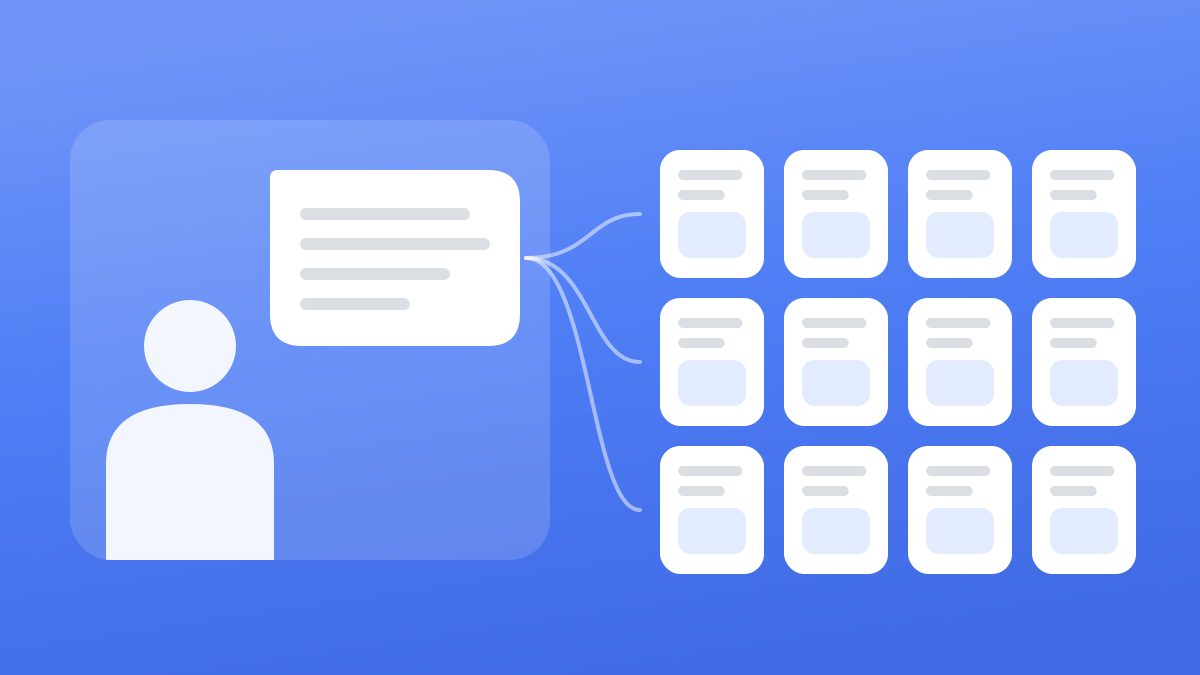
We solve the material problem with one interview a month. We plan 12 posts, write one question for each, the founder answers them, and the answers become the posts. At one post a week, a single conversation covers a whole quarter. Below is the process step by step, with the template we plan from.
Decide who the posts are for#
Write down the buyer before you write down a topic. One sentence per buyer is enough, for one or two types of buyer at most: their role, the kind of company they work at, and the problem they would pay you to fix.
"Founders and business leaders" is too wide to plan against. "Heads of finance at 20 to 100 person software companies who are about to raise" gives you topics on its own, because you can picture what that person worries about on a Monday.
We don't plan a single post for a client until this sentence exists, and every idea on the plan has to serve one of those buyers. A quick test for any idea is whether that buyer would save the post to come back to later.
Add one more line under the buyer: what you want them to do after reading. Reply to a message, accept your invite, book a call. Content does its best work next to outreach, because the person you message has already seen your thinking. The 2024 Edelman and LinkedIn thought leadership report (opens in a new tab) found that 9 in 10 decision-makers and C-suite executives say they are moderately or very likely to be more receptive to outreach from a company that consistently produces high-quality thought leadership. If you want the whole system around it, from profile to replies, start with how to get clients on LinkedIn.
Pick three content pillars from your own work#
A pillar is a lane you keep coming back to, so a buyer who sees three of your posts knows what you're about. Three is plenty for a founder, and all three should come out of the work you already do.
| Pillar | What goes in it | Example for a fractional CFO |
|---|---|---|
| What you know | The problems you solve every week and how you solve them | Reading the numbers before a fundraise |
| What happened to you | Decisions, mistakes and turning points behind the business | Leaving a big firm to work with startups |
| What your market gets wrong | Opinions you would defend on a sales call | Why most seed-stage budgets are fiction |
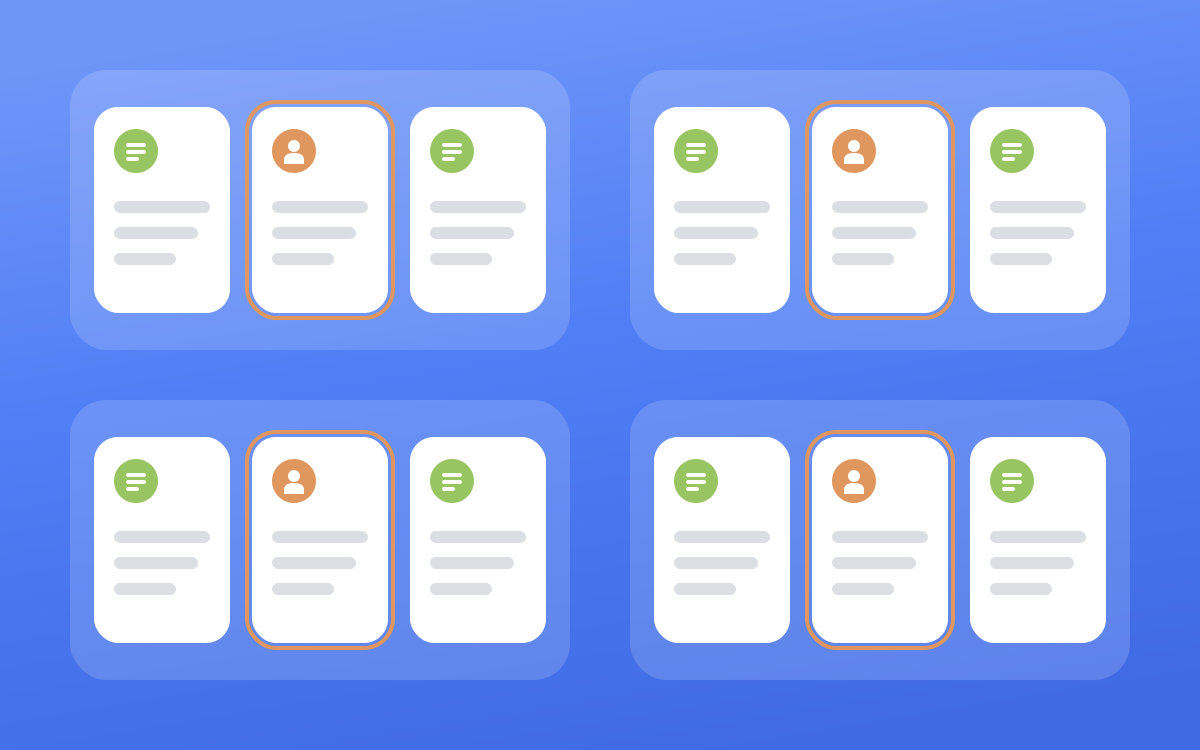
Pillars decide the topics. The second thing to plan is the type of post, and we sort every post into one of two types. Personal posts run on the founder's own story, journey and numbers. Knowledge posts teach: frameworks, opinions, how a job gets done.
Every three posts on a plan hold 1 personal post and 2 knowledge posts. We count it in threes across the whole plan, never per week, so a founder who posts once a week still gets 4 personal posts out of 12 instead of a run of personal ones. Story posts tend to do better in the accounts we write for, but each one uses up a real story, and nobody has an endless supply.
Plan from proven post shapes#
"What should I post about?" is the question that stops most founders. We plan from a different one: which proven post shape can this founder's material fill?
We keep a bank of post patterns that have worked on LinkedIn, each with its hook, its structure and a full example post. Every idea on a plan starts as one of those patterns reshaped into the founder's world. "A logo is not a brand" becomes "A budget is not a forecast" for a finance founder, and "There are 2 types of..." becomes "There are 2 types of founders who hire a fractional CFO".
The idea arrives with a structure that has already held attention, and when a pattern works for you, you can run it again next month with a different story. Six patterns that suit founders, with the raw material each one needs:
| Pattern | Type | What the post needs | A question that fetches it |
|---|---|---|---|
| Then vs now, plus lessons | Personal | Two states side by side and what changed | "What does a normal week look like now next to your first year in business, side by side?" |
| Big number, then lessons | Personal or knowledge | One real number and what it taught you | "You've run [number] [projects] since [year]. What 5 things did the best ones have in common?" |
| Dated turning point | Personal | A date, a decision and what followed | "In [year] you turned down [the offer]. What happened in the six months after?" |
| Myth-bust | Knowledge | A belief your buyers hold and what you see instead | "What are the 3 biggest things [buyers] get wrong about [topic]?" |
| Not-to-do list | Knowledge | Mistakes you've watched cost real money | "What's the most expensive mistake you see [buyers] make with [topic]?" |
| Old way vs new way | Knowledge | How the job used to be done and how it's done now | "How is [task] done today compared with five years ago, side by side?" |
Two rules keep a plan from turning into a template. No pattern appears more than twice in one plan, and a new plan leans on patterns the last one didn't use.
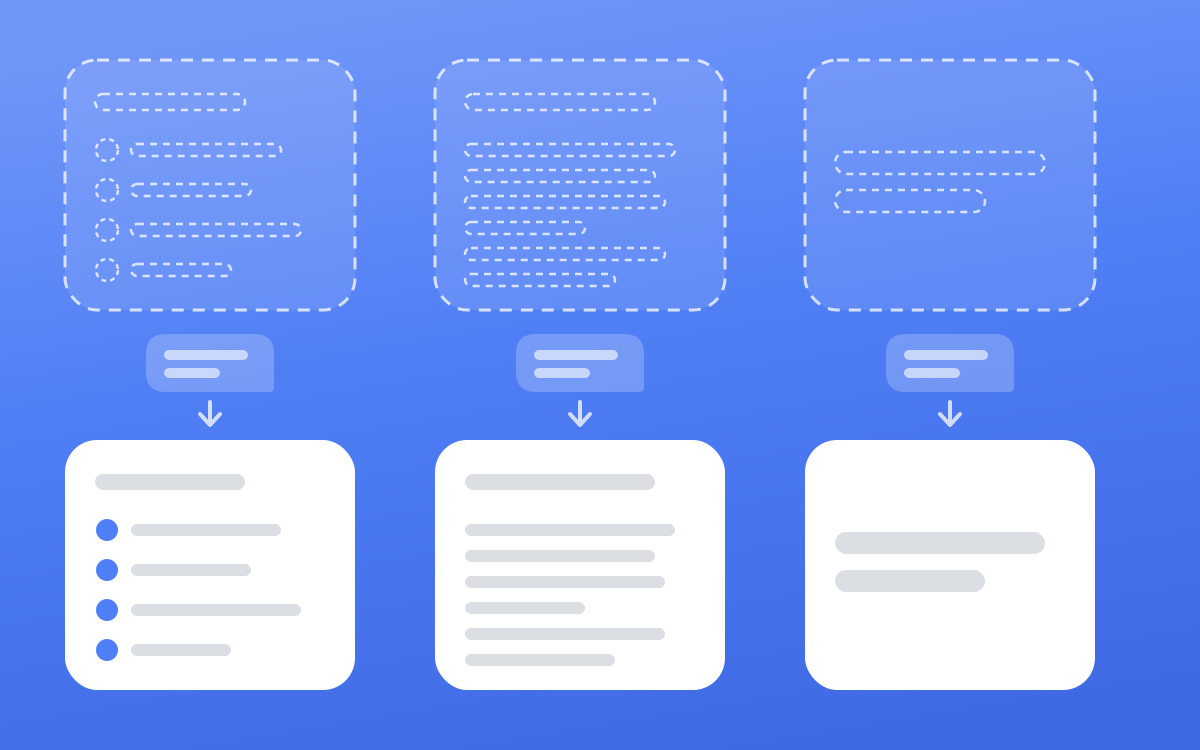
Then let the material pick the format. A moment or a decision becomes a story. A set of lessons becomes a numbered list. One sharp point becomes a short post. Force every answer into a list and the feed starts to look machine-made, one of the quickest tells of LinkedIn posts written with AI.
Write interview questions that come back as posts#
The interview is only as good as its questions. We write one question per post, and every question has to pass one test: someone with no context can read it cold and understand what's being asked. Founders often answer from a doc weeks after the plan was made, so a question that only makes sense next to the plan comes back thin.
The rules we write questions by:
- One ask. "What went wrong, and what would you do differently?" is two questions, and the answer usually does justice to neither.
- Set the scene for personal questions. One to three sentences of the founder's own facts (the company, the year, the number), then the ask. The setup is what brings the right memory back.
- No generic openers. "A lot of founders struggle with..." tells the founder nothing new and hands them the post's conclusion to agree with.
- Put the shape inside the ask. "The 5 things", "side by side", "year by year" is all the structure a question needs.
- Ask for facts when the pattern needs facts. A then-vs-now post can't be built from "how did that feel?"
Here is the difference on one question.
| Weak | Strong |
|---|---|
| "How did it feel going from a big firm to your own practice, and what are you doing differently now?" | "You spent 9 years at a large accounting firm before starting your own practice in 2020. What does a normal week look like now next to your last year there, side by side?" |
The strong version names the situation, asks one thing, and the answer fills a then-vs-now post without a follow-up call. A founder can answer it in a voice note between meetings.
Check what you've already said#
Before a new plan, list every post you've published or already planned, and note four things for each one: the topic, the hook pattern, the story or number it used, and the opinion it argued. A new idea that repeats any one of those four is a repeat, even in a new format. Last month's story retold as a list still reads as a rerun to the people who saw it the first time.
Personal stories run out first. When your list of unused stories gets short, spend part of the next interview finding new ones rather than retelling a story your audience has already heard.
Check the facts a planned post leans on too, since a stat or a rule that was true last year may not hold now.
How often should a founder post on LinkedIn?#
As often as you can keep up for a full quarter, and twice a week or more if you can hold it.
Buffer's analysis of over 2 million posts from 94,000+ accounts (opens in a new tab) found that posting 2 to 5 times a week, compared with once a week, came with +1,182 impressions per post and a 0.23 percentage point lift in engagement rate. Buffer calls that range the sweet spot. Accounts posting 11+ times a week saw the biggest gains. The study compared each account with its own average, and Buffer says the results held whether an account had 500 followers or 50,000.
Be careful with the other number that gets quoted in posting advice. "Companies that post weekly see a 2x lift in engagement" comes from LinkedIn's best practices for Company Pages (opens in a new tab). It's about Pages, and it says nothing about a founder's personal profile.
Here is how we set cadence for clients. Each founder picks a number of posts a week and a pool of days they're happy to post on, and the posts are spread across that pool so they never land on back-to-back days. Two a week from Monday, Wednesday and Thursday becomes Monday and Thursday.
The plan stays 12 posts whatever the cadence. The cadence only decides how long those 12 last.
| Posts a week | 12 posts last | Posts in a 13-week quarter | Interviews needed |
|---|---|---|---|
| 1 | 12 weeks | 13 | 1, plus one spare slot |
| 2 | 6 weeks | 26 | 2, plus two spare slots |
| 3 | 4 weeks | 39 | 3, plus three spare slots |
Spare slots are where a timely post goes, like news in your market or a result worth sharing.
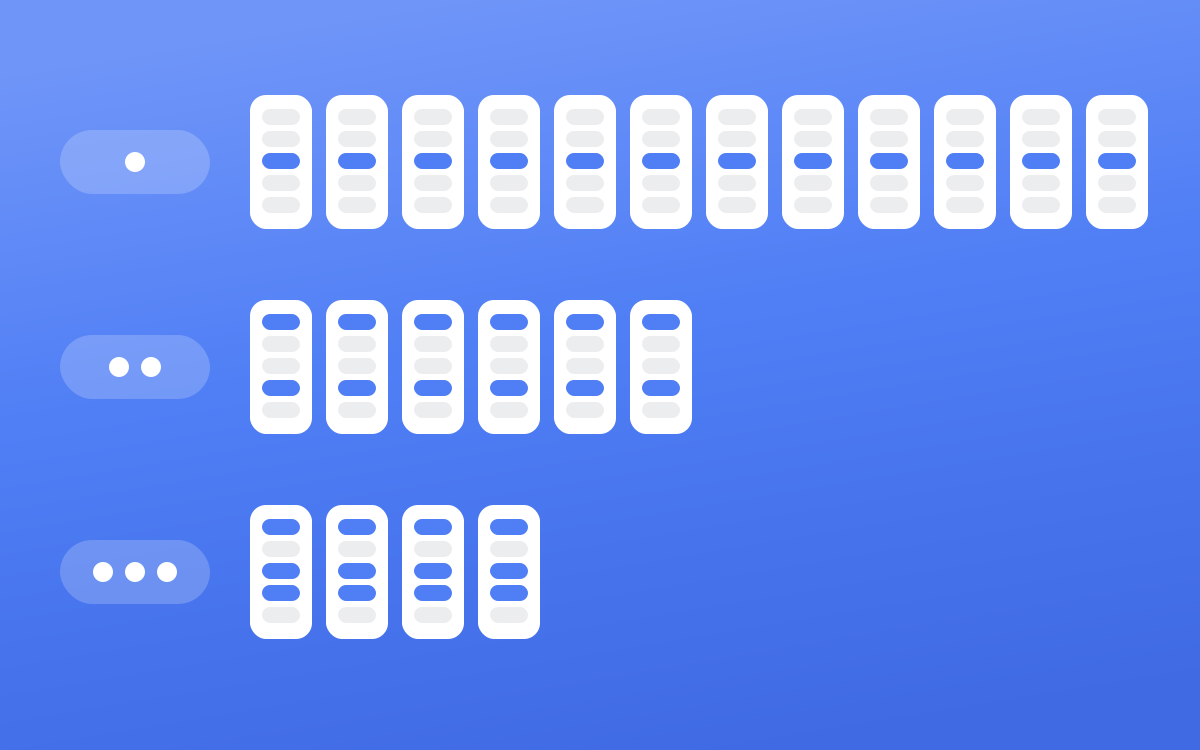
Keep a count of how many weeks of ready posts you have left, and book the next interview well before that number reaches zero. When a new plan lands, fill the first empty week first. If you add the new posts after your furthest booked date instead, the calendar looks full while your feed goes quiet for weeks.
The one-page plan template#
Copy this into a doc and fill it in before the interview. The title of each post is a short handle of 3 to 6 words, so you can scan the plan at a glance. The hook gets written later, from the answer.
QUARTER:        Q_ 20__
BUYER:          [role] at [type of company] who [problem you fix]
AFTER READING:  [reply / accept an invite / book a call]
PILLARS:        1. ______  2. ______  3. ______
CADENCE:        _ posts a week, from [pool of days]
MIX:            every 3 posts = 1 personal + 2 knowledge
INTERVIEWS:     [date]  [date]  [date]
ALREADY USED:   [topics, stories, numbers, hook patterns]

POST 1 · [3-6 word title]
Date:
Pillar:
Pattern:
Type:           personal / knowledge
Question:
Here are three posts filled in for an invented founder, a fractional CFO for seed-stage software startups who posts three times a week. The personal post sits in the middle of the week.
| Date | Title | Pattern | Type | Question |
|---|---|---|---|---|
| Monday | Numbers founders misread | Myth-bust | Knowledge | "What are the 3 biggest things seed-stage founders get wrong when they read their own numbers?" |
| Wednesday | The year I left | Dated turning point | Personal | "You were two years from partner when you left your firm in 2021 to work with startups. What happened in the first six months after that decision?" |
| Thursday | The costliest finance mistake | Not-to-do list | Knowledge | "What's the most expensive finance mistake you've watched a seed-stage founder make?" |
What to measure#
Judge the plan once a month, by pattern and by buyer. One post is too noisy to learn from, and a reaction count says little about whether the right people read it.
LinkedIn's post analytics (opens in a new tab) show profile activity and post viewer demographics, and they count saves and sends. Those are the numbers worth checking on each post:
- Saves and sends, because people keep or pass on a post that has reference value.
- Profile activity, because a post that sends buyers to your profile is doing its job.
- Viewer demographics, to check whether the people reading look like the buyer you wrote down.
- Comments from buyers, where who commented matters far more than the total.
Then look past LinkedIn's numbers at the business ones: messages and connection requests from people who match your buyer, outreach replies that mention a post, and sales calls where the lead had already read you. When your posts and your outreach messages reach the same list of buyers, those last numbers are where the strategy shows up.
At the end of each month, group the posts by pattern. Keep the patterns that brought buyers in and run them again with new stories. Give a weak pattern a couple more tries with better material before you drop it.
This is the plan we run for founders at Blen: one interview a month, 12 posts written in the founder's voice, and a founder who approves them in their own app instead of trading edits. If you want the details of that last part, here is why we stopped asking for edits.
Frequently asked questions#
How often should a founder post on LinkedIn?#
Pick a number you can keep for a full quarter, and aim for 2 to 5 posts a week if you can hold it. Buffer's study of over 2 million posts found that range gave a clear lift in reach per post over posting once a week. A steady 2 a week you can keep is worth more than 5 a week for a month and then nothing.
What should a founder post on LinkedIn?#
Posts from three lanes: what you know, what happened to you, and what you think your market gets wrong. Plan them as a mix of 1 personal post to every 2 teaching posts, and build each one from a real answer you gave, never from a generic topic list.
How long should a LinkedIn post be?#
Aim for roughly 1,300 to 2,500 characters. AuthoredUp's analysis of 372,126 posts (opens in a new tab) found that posts between 1,301 and 2,500 characters got 27% higher engagement than posts under 400 characters. Length only helps if the opening lines earn the click, which is what hooks and the "see more" fold are about.
Is posting once a week on LinkedIn enough?#
It keeps your profile active, but in Buffer's data, accounts got more impressions per post in weeks when they posted 2 to 5 times than in weeks with a single post. Once a week is still a fine place to start if it's what you can keep. One interview of 12 questions covers a full quarter at that pace.