LinkedIn headline for founders: a formula and 12 examples
Role, offer, one number, one action. The headline formula we use on founder profiles, with 12 examples and a trim order for long ones.

Founder of Blen10 min read
On this page
A good LinkedIn headline for a founder names your role and company, says what you do and for whom in plain words, proves it with one number, and ends with the one thing you want the reader to do. For example, "CEO of Ledgerline | Month-end close in 3 days for mid-size finance teams | 120+ companies | Message me to learn more". That's 116 characters, and a stranger gets it on the first read.
Below is the formula we use when we rewrite founder profiles at Blen, 12 original examples by situation, how long a headline should really be, and the mistakes that make buyers scroll past.
The four-part headline formula for founders#
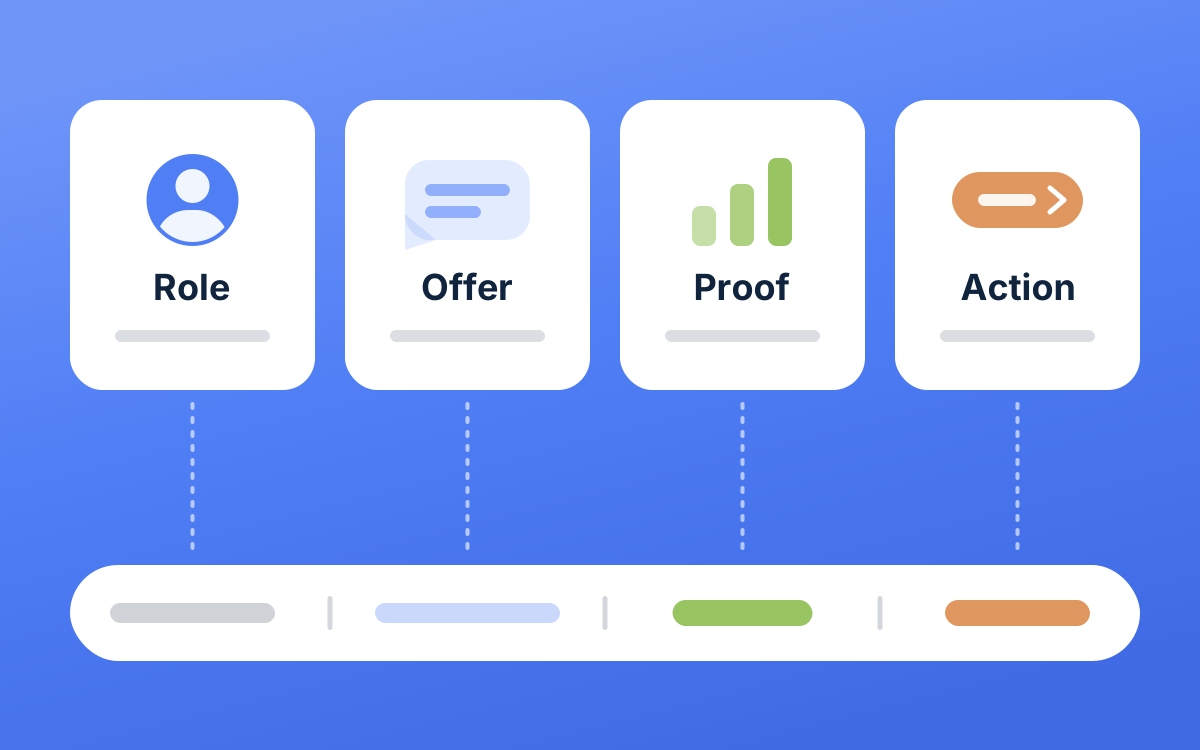
Every block has one job, and the order matters.
{Role} of {Company} | {what you do, for whom} | {one number} | {the one action}
| Block | Its job | Example |
|---|---|---|
| Role and company | Tells a stranger who they're dealing with | CEO of Ledgerline |
| What you do, for whom | Tells them why they should care | Month-end close in 3 days for mid-size finance teams |
| One number | Proves it without adjectives | 120+ companies |
| The one action | Tells them what to do next | Message me to learn more |
Start with your role and company#
When we write a founder's headline, we draft three options in the same shape and the founder picks one. The options that open with "Founder of" or "CEO of" get picked almost every time. Drafts that open with a clever phrase like "Bringing bold ideas to life" get passed over.
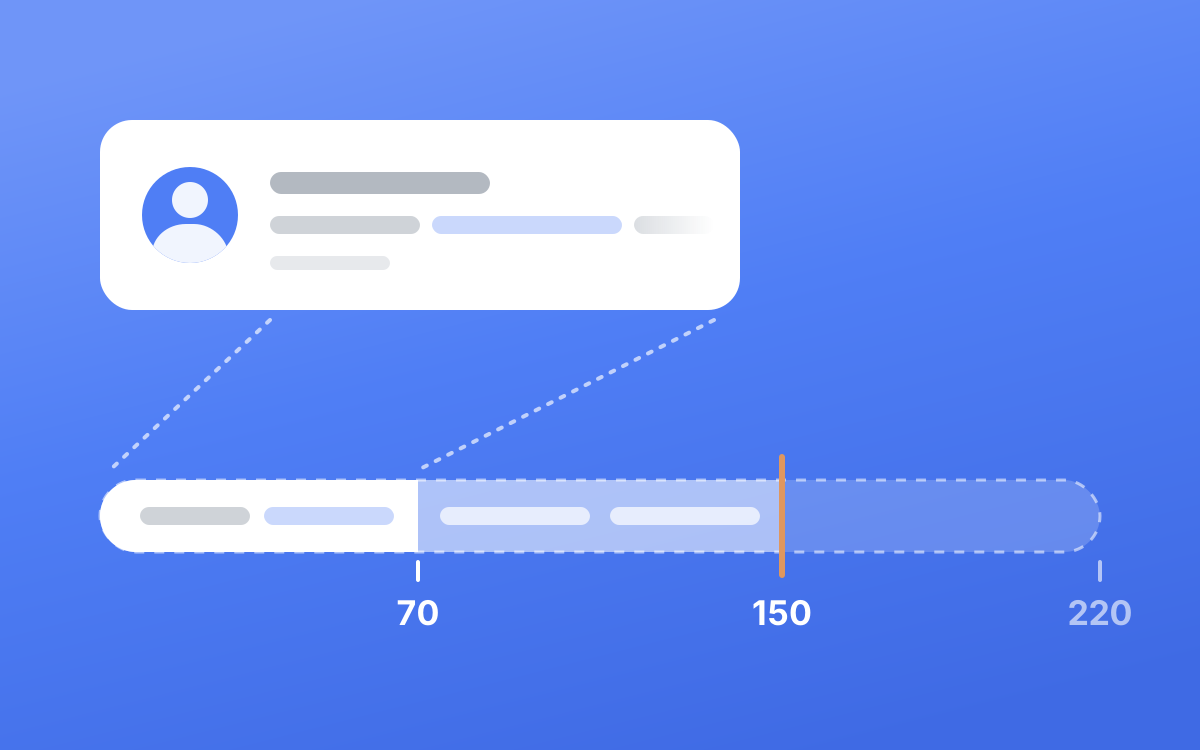
That's because the start of your headline is the part people actually see. LinkedIn shows your headline in search results (LinkedIn Help (opens in a new tab)), and in search results, connection requests and comment sections only about 60 to 70 characters display, according to AuthoredUp's character limit guide (opens in a new tab). "Founder of Loopdesk" fits in that space with room to spare, so a buyer knows they're looking at a founder before they've read anything else.
If you run two companies, pick the one your buyer cares about. If you don't front a single company, a plain label like "Fractional CFO" or "Independent Pricing Consultant" does the same job.
Say what you do in words a stranger gets#
The second block is your offer sentence. Write it as "Helping {exact who} {get the exact thing they want}", then cut it until nothing is left to cut.
Specific beats vague every time, so "founders selling $50M+ companies" is better than "business owners", and "IT and cyber security for UK law firms" is better than "technology solutions". If a word could sit in anyone's headline (solutions, growth, innovation, transformation), it's doing nothing in yours.
A quick test is to read it to someone outside your industry. If they can't repeat back what you do after one read, rewrite it.
Prove it with one number#
A headline with no proof is a claim. A number is a fact the reader can weigh for themselves, and digits catch the eye in a line of words.
Good proof for a founder headline looks like this:
- customers or clients served (150+ practices)
- results delivered (25 funding rounds supported, 600+ kitchens fitted)
- time in business (20 years in business)
- scale (300 people, 14 depots)
- traction, if you're early (2,000+ on the waitlist, $4M seed raised)
Pick the number your buyer cares about most, which is rarely the one you're proudest of. Someone buying software for a hospital wants to know how many hospitals already use it.
Leave out adjectives. "Used by 40 clinics" says more than "leading clinic software".
End with the one action#
The last block tells the reader what to do. "Message me to learn more" is our default because it's the easiest thing to say yes to. If the real next step is an application or a demo link in your Featured section, say that instead, for example "Apply through Featured".
Use the same action everywhere on your profile. A profile whose banner says "book a call", whose headline says "follow for tips" and whose About says "visit my website" asks for three different things and usually gets none of them.
How long should a LinkedIn headline be?#
LinkedIn lets you write up to 220 characters in your headline, as its own Talent Blog (opens in a new tab) puts it. That doesn't mean you should use them all.
We cap founder headlines at 150 characters. Past that, a headline reads as a wall of pipes and gets cut off in most places anyway, so the extra words mostly go unread. The 12 examples further down all land between 108 and 127.
When yours is too long, trim in this order#
- Drop the second proof block. One strong number beats two average ones.
- Shorten the offer wording until it reads as a short phrase.
- Keep the role and company, and keep the action.
Here's that trim on one headline, with real character counts.
- "Founder & CEO of Tallyroom | Helping restaurant groups with 5 to 50 sites pay their staff correctly and on time | 900+ restaurants | 11 years in business | Message me to learn more" (180 characters)
- "Founder & CEO of Tallyroom | Helping restaurant groups with 5 to 50 sites pay their staff correctly and on time | 900+ restaurants | Message me to learn more" (157 characters, second proof block gone)
- "Founder & CEO of Tallyroom | Payroll for restaurant groups with 5 to 50 sites | 900+ restaurants | Message me to learn more" (123 characters, offer shortened)
LinkedIn headline examples for founders, by situation#
Every company below is made up. Swap in your own facts and keep the shape.
Early-stage startup founder#
Before you have revenue, your proof is traction, like a waitlist, live pilots or a raise.
- "Co-Founder of Pantrywise | Meal plans built from what's already in your fridge | 2,000+ on the waitlist | Join through Featured" (127 characters)
- "Founder of Loopdesk | Booking software for physio clinics | 40 clinics live in 6 months | Message me for a demo" (111 characters)
B2B SaaS founder or CEO#
- "CEO of Ledgerline | Month-end close in 3 days for mid-size finance teams | 120+ companies | Message me to learn more" (116 characters)
- "Co-Founder & CTO, Shiftcraft | Staff rotas for hospitals | Used in 30+ hospitals across 4 countries | Message me" (112 characters)
Agency or service business owner#
- "Founder of Brightside Studio | Websites that book appointments for dental practices | 150+ practices | Message me to learn more" (127 characters)
- "Managing Director, Northgate IT | IT and cyber security for UK law firms | 20 years in business | Message me" (108 characters)
Consultant or fractional executive#
When you are the brand, the role label does the work a company name would.
- "Fractional CFO | Helping SaaS founders get investor-ready numbers | 25 funding rounds supported | Message me" (108 characters)
- "Independent Pricing Consultant | Helping B2B software companies raise prices | 60+ projects | Send me your pricing page" (119 characters)
CEO of an established company#
- "CEO of Harrow Logistics | Cold-chain freight across Europe | 300 people, 14 depots | Message me about partnerships" (114 characters)
Small business owner#
- "Owner of Oakline Joinery | Fitted kitchens for homes in Bristol | 600+ kitchens since 2009 | Message me for a quote" (115 characters)
Founder who is raising, hiring or investing#
When the action you want is a pitch or an application, the last block says exactly that.
- "Founder of Kestrel Labs | Battery recycling for e-bike makers | $4M seed raised | Hiring engineers, see Featured" (112 characters)
- "Founder & Partner, Fieldstone Capital | Backing B2B founders at pre-seed | 35 portfolio companies | Pitch through Featured" (122 characters)
Three founder headlines, before and after#
The buzzword headline#
Before, "Founder & CEO @ Ledgerline | Entrepreneur | Visionary | Passionate about innovation, finance & technology".
After, "CEO of Ledgerline | Month-end close in 3 days for mid-size finance teams | 120+ companies | Message me to learn more".
"Entrepreneur" and "Visionary" are labels a buyer can't check, and "innovation, finance & technology" could describe thousands of companies. The rewrite swaps each label for a fact about what the product does, who it's for and how many teams already use it.
The tagline with nobody behind it#
Before, "Helping ambitious businesses unlock their full potential through strategic transformation".
After, "Fractional COO | Helping 20-50 person agencies fix delivery and margins | 30+ agencies | Message me".
The before version never says who you are or who it's for, and there's no number anywhere. A stranger can read it twice and still not know whether it belongs to a coach or a software company.
The default title#
Before, "Owner at Oakline Joinery".
After, "Owner of Oakline Joinery | Fitted kitchens for homes in Bristol | 600+ kitchens since 2009 | Message me for a quote".
LinkedIn usually creates your headline when you add a current position (LinkedIn Help (opens in a new tab)), so plenty of founders never touch it. A company name only helps people who already know the company, and the buyers you want to reach mostly don't.
Mistakes that cost founders replies#
- Writing for recruiters. A string of skills like "Strategy | Leadership | Operations" reads like a CV, when a buyer wants to know what you'll do for them.
- Using labels nobody can check, like visionary, thought leader, serial entrepreneur or world-class. Swap each one for a number.
- Writing a clever line that needs a second read, because most people won't give it one.
- Asking for several things at once. "DM me | Follow for tips | Book a call" splits a small amount of attention three ways.
- Putting who you are at the end, where most people never get to.
- Writing a headline that doesn't match the rest of the profile, which is worth its own section.
Make your headline, banner and About say the same thing#
Your headline sits under your name on every invite you send and every comment you leave, so it's usually the first thing a buyer reads. The interested ones click through to your profile. If the banner and About then describe the business in different words, they have to work out which version is true, and most won't bother.
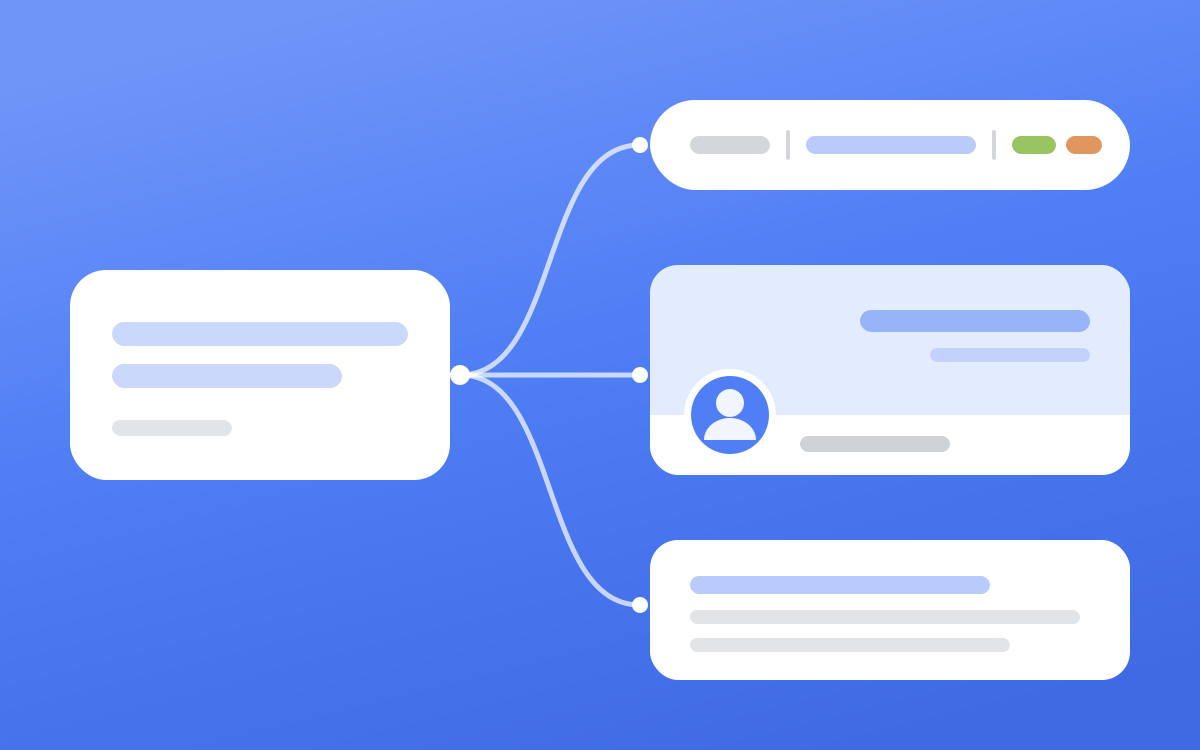
We fix that by writing one offer sentence first and putting it in three places:
- the headline, as the second block
- the banner tagline, cut to 10 words or fewer
- the first line of the About section, in "we" or "I" form
For Ledgerline, "Month-end close in 3 days for mid-size finance teams" goes in the headline, "Close your books in 3 days" goes on the banner, and "We help mid-size finance teams close the month in 3 days" opens the About.
The full section-by-section checklist is in our guide to LinkedIn profile optimization for founders. If you're reaching out to buyers, read it alongside how to write a connection request message and the first message after they accept, because the people you invite will check your headline before they reply.
Write yours in 10 minutes#
- Write the offer sentence as "Helping {exact who} {get the exact thing}". Make it clearer, then make it shorter.
- List every number you have, such as clients, results, years, team size and money raised. Circle the one your buyer cares about.
- Decide the one action you want, whether that's a message, a demo or an application.
- Put it together as role and company, offer, number, action.
- Count the characters. If you're over 150, trim in the order above.
- Show it to someone outside your industry for 3 seconds. If they can't say what you do, go back to step 1.
When we rewrite a founder's profile at Blen, we follow the same steps. The one difference is that we write three options that keep the shape and change only the middle (which number leads, how the offer is worded), and the founder picks. To see where the profile fits next to lead lists, outreach and posts, read how to get clients on LinkedIn.
Frequently asked questions#
What should a founder put in their LinkedIn headline?#
Your role and company, what you do and for whom, one number that proves it, and the one action you want people to take. Keep that order, because the start of the headline is the part that shows in search results, invites and comments.
Should I write Founder or CEO in my LinkedIn headline?#
Use the title your buyer expects to deal with. "Founder" suits early-stage startups and owner-led service firms, where people want to talk to the person who built it. "CEO" signals a company with a team behind it, and "Founder & CEO" is fine if it still leaves room for the other three blocks.
How many characters can a LinkedIn headline have?#
LinkedIn allows 220 characters. According to AuthoredUp (opens in a new tab), only about 60 to 70 of them display in search results, connection requests and comment sections. We keep founder headlines under 150 and put the role and company first so the visible part still makes sense.
What's the difference between the LinkedIn headline and the About section?#
The headline is the short line under your name that follows you around LinkedIn, in search, invites and comments. The About section is the longer summary on your profile page, with room for your results and who you help. The headline earns the click and the About earns the message, so both should open with the same offer sentence.